Free Shipping On Orders over $75

0

Your Cart is Empty

Women's
  • Men's
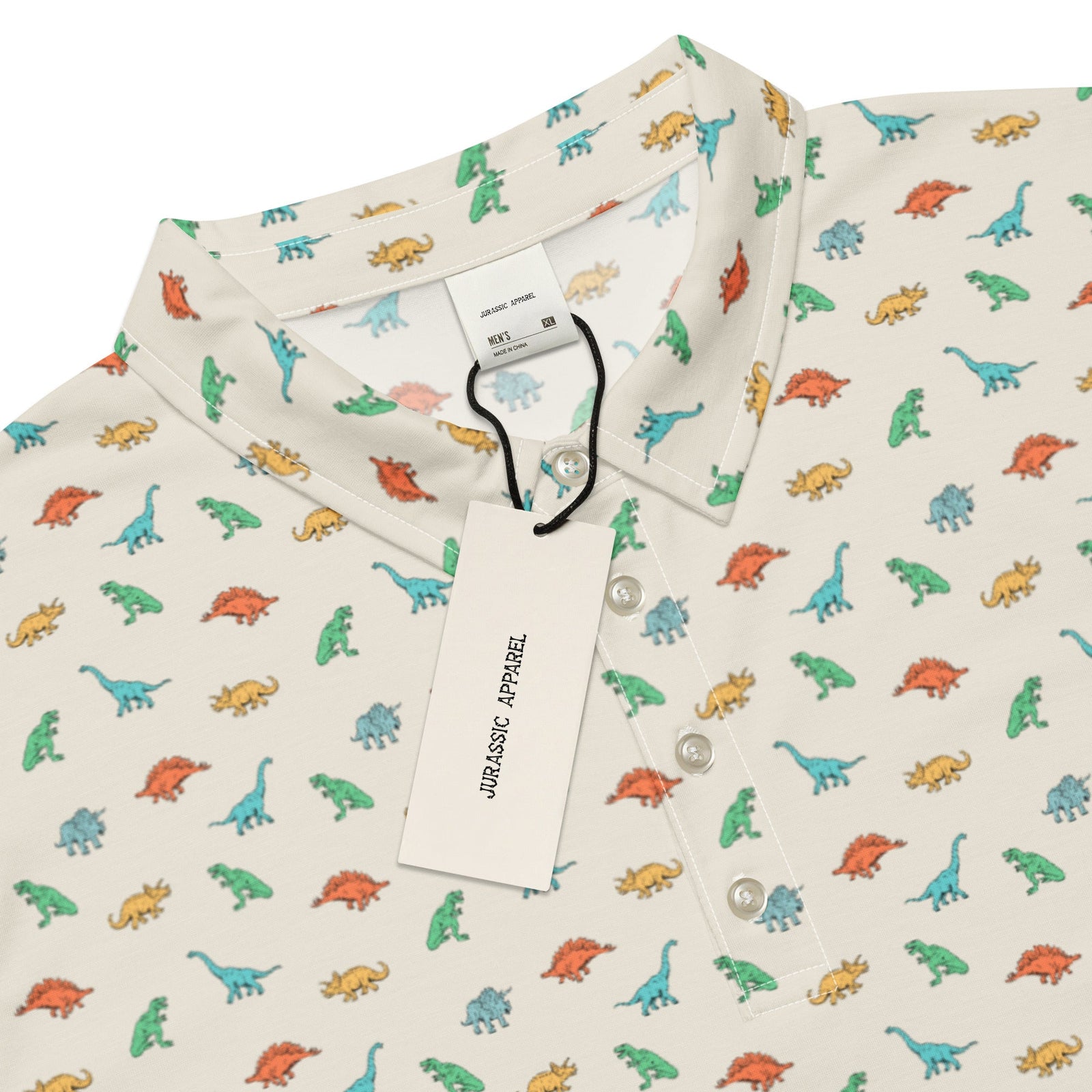
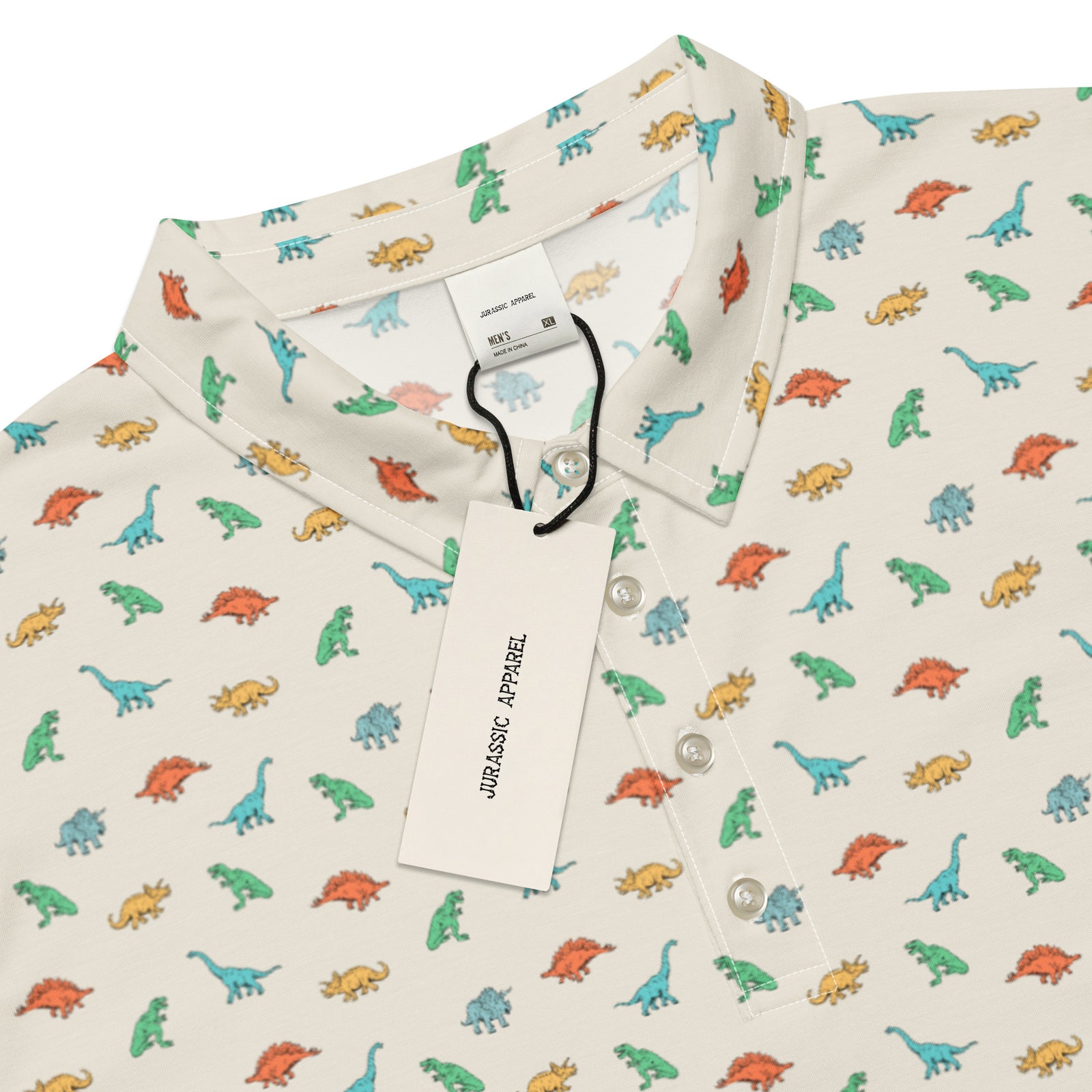
  • Polo shirt with Colorful Dino's design, detail view
  • Kids
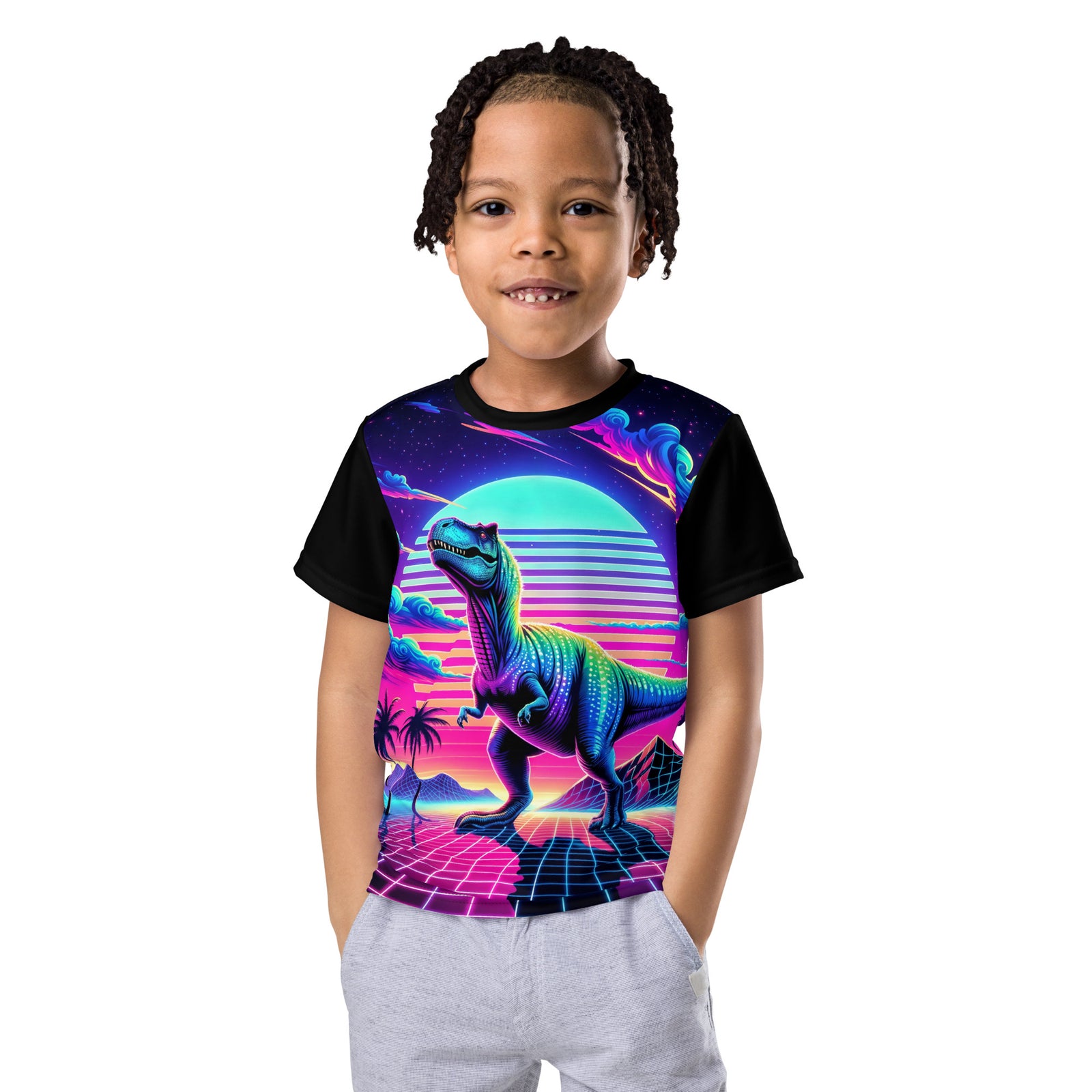
  • Toddler T-Shirt with Synthwave Dinosaur design, front view
  • Baby/Toddler
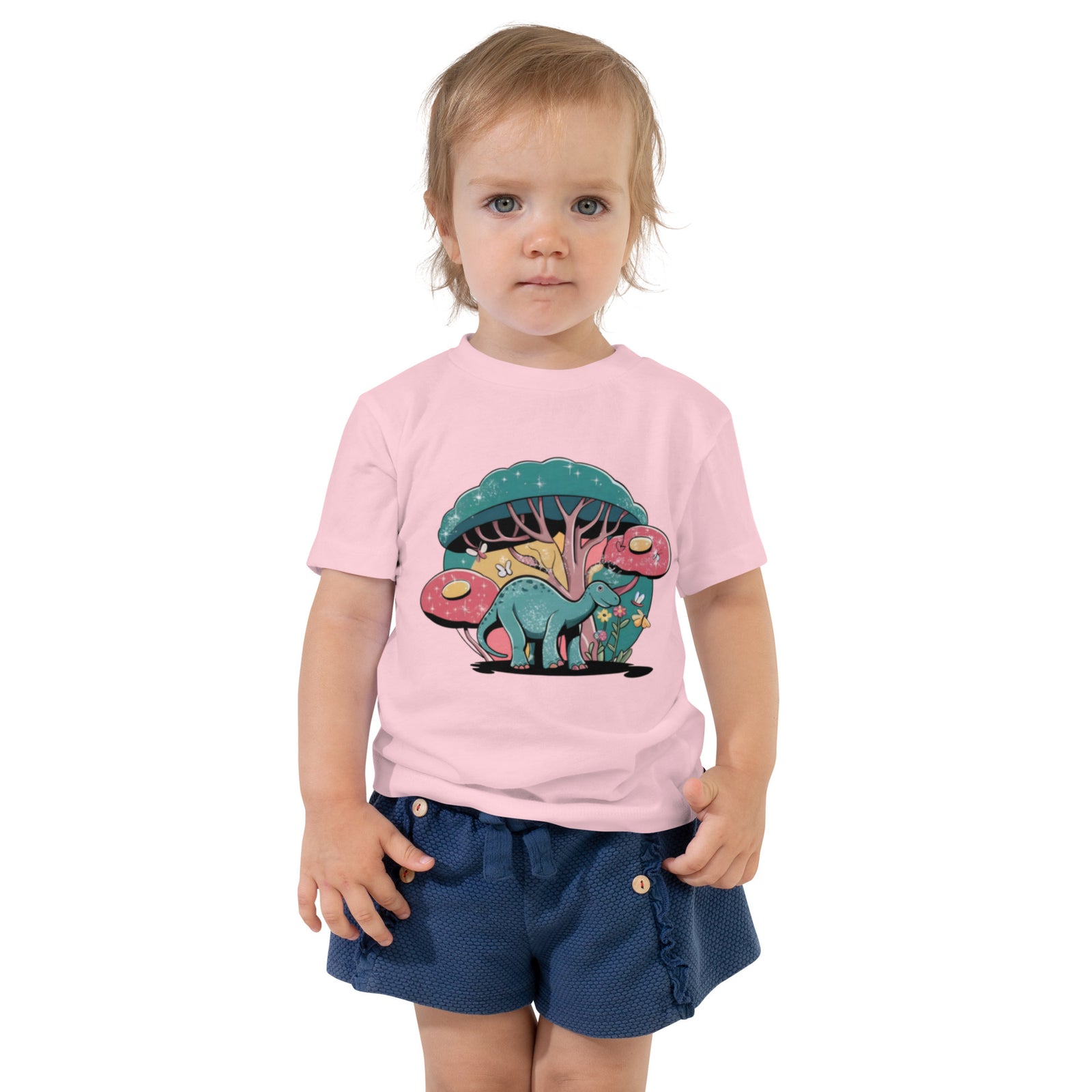
  • Toddler Pink T-Shirt with Abstract Dino Forest design, front view
  • Accessories
  • Throw blanket with Forest Guaibasaurus design, lifestyle photo
  • Dinosaur Trivia: 80 Questions and Answers for Kids, Families and Trivia Night

    November 01, 2026 11 min read

    You need questions that a seven-year-old can get right, and some that will stump the uncle who has seen every Jurassic Park film twice. Here are 80 dinosaur trivia questions with the answers right underneath. There's an easy round for young kids, a medium round for families, a hard round for adults, a true-or-false round, and a round on what dinosaur names mean.

    At the end there's a short quiz that tells you which dinosaur you are. Every answer was checked against current science, and where scientists still argue about something, the answer says so.

    How to use these dinosaur trivia questions

    • Pick the round by the youngest player. The easy round works from about age 5, read aloud. The medium round suits ages 8–12 and most mixed family tables. Save the hard round for teens and adults.
    • Rounds of ten work well. Score one point a question. A tie goes to the true-or-false round, sudden death.
    • Read the explanation out too. The "why" after each answer is often better than the question, and it's what kids repeat at school the next day.

    Easy dinosaur trivia for kids (ages 5–8)

    1. What does the word "dinosaur" mean? Terrible lizard. Scientist Richard Owen made up the name in 1842 from two Greek words, deinos (terrible) and sauros (lizard).
    2. How many horns did Triceratops have? Three: two long ones over its eyes and a short one on its nose. Its name means "three-horned face."
    3. Which dinosaur had big plates along its back and spikes on its tail? Stegosaurus.
    4. Did dinosaurs lay eggs or have live babies? They laid eggs. Every dinosaur we know of hatched from an egg.
    5. What do you call a scientist who digs up and studies dinosaur fossils? A paleontologist (pay-lee-on-TOL-oh-jist).
    6. Did T. rex eat meat or plants? Meat. It was one of the biggest meat-eating land animals ever.
    7. Did dinosaurs and people ever live at the same time? No. The last of the giant dinosaurs died about 66 million years ago. People have only been around for about 300,000 years.
    8. Which animals alive today are dinosaurs? Birds! Every pigeon, chicken and penguin is a living dinosaur.
    9. What does "Tyrannosaurus rex" mean? Tyrant lizard king.
    10. Which dinosaur had a heavy club on the end of its tail? Ankylosaurus. It was covered in bony armor, like a walking tank.
    11. What is a fossil? The remains or traces of something that lived long ago, preserved in rock. Bones, teeth, footprints, eggs and even poop can become fossils.
    12. What do we call the giant plant-eaters with very long necks, like Brachiosaurus? Sauropods.
    13. Was the Pterodactyl a dinosaur? No. Pterosaurs were flying reptiles that lived at the same time as dinosaurs. They were close cousins, but not dinosaurs.
    14. Was Mosasaurus, the giant sea monster, a dinosaur? No. It was a marine reptile, more closely related to today's lizards and snakes.
    15. How many fingers did T. rex have on each hand? Two.
    16. What hit the Earth 66 million years ago and wiped out the giant dinosaurs? An asteroid, about 6 miles (10 km) wide. It landed near what is now Mexico.
    17. What was on Velociraptor's foot that made it special? A big curved claw on its second toe, which it held up off the ground.
    18. Did Velociraptor have feathers? Yes. Its arm bones have bumps where big feathers attached, a bit like a bird's wing.
    19. On how many continents have dinosaur fossils been found? All seven, even Antarctica, which was much warmer back then.
    20. Were all dinosaurs giants? No. Compsognathus was about the size of a chicken.

    Medium dinosaur trivia questions (ages 8–12 and families)

    1. What are the three periods of the age of dinosaurs, in order? Triassic, Jurassic, Cretaceous.
    2. In which period did T. rex live? The Late Cretaceous, right at the very end, about 68 to 66 million years ago.
    3. Who lived closer in time to T. rex: Stegosaurus, or you? You. Stegosaurus died out roughly 145 million years ago, about 80 million years before T. rex appeared. Only 66 million years separate T. rex from us.
    4. Which is older, Brachiosaurus or Triceratops? Brachiosaurus, from the Late Jurassic about 150 million years ago. Triceratops was one of the last dinosaurs.
    5. What is the name of the famous T. rex skeleton at the Field Museum in Chicago? Sue. It was found in South Dakota in 1990 by Sue Hendrickson, and it's about 90% complete.
    6. About how long was T. rex from nose to tail? Around 40 feet (12 meters), about as long as a school bus.
    7. How big was a real Velociraptor? About the size of a turkey. It was roughly 6 feet long including its tail, and it lived in what is now Mongolia.
    8. The "raptors" in the Jurassic Park films are closer in size to which real dinosaur? Deinonychus, a larger relative from North America.
    9. What was the first dinosaur ever given a scientific name? Megalosaurus, named by William Buckland in 1824.
    10. Where did scientists first put Iguanodon's thumb spike? On its nose, like a rhino horn. Later skeletons showed it belonged on the hand.
    11. What is a coprolite? Fossilized poop.
    12. Why did some dinosaurs swallow stones? To help grind up food in their stomachs, the way some birds do today. The stones are called gastroliths.
    13. Which dinosaur is usually named as the heaviest ever found? Argentinosaurus, a titanosaur from Argentina. It's often estimated at more than 100 feet long and 70 tons, though estimates vary a lot because only parts of it have been found.
    14. What is the smallest dinosaur alive today? The bee hummingbird of Cuba, about 2 inches long. Birds are dinosaurs, remember.
    15. Which dinosaur had a thick, domed skull up to 10 inches thick? Pachycephalosaurus.
    16. What was Parasaurolophus's long, hollow head crest probably used for? Making sound. Air moving through its tubes may have made a low, trumpeting call.
    17. About how many teeth did T. rex have? About 50 to 60. The biggest, root included, were around a foot long.
    18. How strong was T. rex's bite? One widely cited 2017 study put it near 8,000 pounds of force, among the strongest bites of any land animal.
    19. Which dinosaur's name means "good mother lizard"? Maiasaura. Its fossils were found with nests, eggs and babies in Montana, where it's the state fossil.
    20. Which dinosaur is Colorado's state fossil? Stegosaurus. Some of the first Stegosaurus skeletons were found there in the 1870s.

    Hard dinosaur trivia for adults

    1. What's the name for the spikes on the end of a Stegosaurus tail? A thagomizer. The word came from a 1982 Far Side cartoon by Gary Larson. Paleontologists liked it so much that they adopted it.
    2. Dinosaurs are split into two big groups by hip shape. What are they called, and which group did birds come from? Saurischia ("lizard-hipped") and Ornithischia ("bird-hipped"). Birds came from the lizard-hipped group.
    3. What is the extinction that ended the age of dinosaurs called? The K–Pg (Cretaceous–Paleogene) extinction, formerly called the K–T extinction.
    4. What chemical element, found in a thin clay layer around the world, pointed to an asteroid impact? Iridium. Luis and Walter Alvarez proposed the impact theory in 1980.
    5. Where is the impact crater, and how wide is it? Chicxulub, on Mexico's Yucatán Peninsula, about 110 miles (180 km) across.
    6. Which two paleontologists' bitter rivalry in the 1870s and 1880s became known as the Bone Wars? Othniel Charles Marsh and Edward Drinker Cope.
    7. Brontosaurus was declared not a real genus in 1903. What happened in 2015? A large study brought it back as its own genus, separate from Apatosaurus.
    8. The first nearly complete dinosaur skeleton in North America was found in 1858 in which state? New Jersey (Hadrosaurus foulkii, found in Haddonfield). It's the state dinosaur.
    9. The oldest known dinosaurs, such as Eoraptor, lived about how long ago, and where? About 230 million years ago, in what is now Argentina.
    10. Which dinosaur name is often called the longest? Micropachycephalosaurus, 23 letters.
    11. And which dinosaur has the shortest genus name? Yi (Yi qi), a small dinosaur from China described in 2015.
    12. What was unusual about Yi qi? It had bat-like wings of skin, stretched over a long rod of bone or cartilage on its wrist.
    13. Which armored dinosaur was found in Canadian oil sands in 2011, so well preserved it looks like a statue? Borealopelta, a nodosaur at the Royal Tyrrell Museum. Its armor and skin are preserved well enough that scientists worked out it was reddish-brown.
    14. Which feathered dinosaur, described from China in 1996, was also the first to have its color worked out? Sinosauropteryx. In 2010, pigment structures in its fossil showed a ginger color and a striped tail.
    15. Archaeopteryx, the famous "first bird," was found in which country? Germany, in the Solnhofen limestone, in 1861. It lived about 150 million years ago.
    16. What is the nickname of the heaviest T. rex yet measured, and where is it? Scotty, at the Royal Saskatchewan Museum in Canada. A 2019 study estimated it at about 19,500 pounds.
    17. Which dinosaur is named after Harry Potter's school? Dracorex hogwartsia, named in 2006.
    18. Oviraptor means "egg thief." Why is the name unfair? Its relatives were later found sitting on nests, brooding their own eggs. The "stolen" eggs had been its own all along.
    19. The original Spinosaurus fossils were destroyed in what event? A 1944 bombing raid on Munich during World War II. For decades only drawings and photos survived.
    20. Which plant-eater had about 500 teeth and may have replaced each one as often as every two weeks? Nigersaurus, from the Sahara. Read more in our Nigersaurus fact file.

    Bonus tiebreaker: Did any mammals eat dinosaurs? Yes. A fossil of Repenomamus, a mammal about the size of a badger, was found in China with a baby Psittacosaurus in its stomach.


    True or false round

    Good as a tiebreaker, or as a warm-up for kids who aren't ready for open questions.

    1. T. rex could run as fast as a car on the highway. False. Most estimates are far slower, and a 2017 study suggested about 12 mph.
    2. Birds are dinosaurs. True.
    3. Dinosaurs lived in Antarctica. True. Cryolophosaurus, a crested meat-eater, was found there.
    4. Stegosaurus had a second brain in its hips. False. There's a space in its hip bones, but it didn't hold a brain. It may have held a store of energy-rich tissue, like birds have.
    5. Stegosaurus's real brain was tiny for its size. True. It's often compared to a lime.
    6. Pteranodon was a dinosaur. False. It was a pterosaur.
    7. Some dinosaurs had feathers. True, lots of them, including relatives of T. rex.
    8. Velociraptor was taller than a grown man. False. It came up to about your knee.
    9. All dinosaurs died out 66 million years ago. False. Birds survived, and they're dinosaurs.
    10. Dinosaurs lived at the same time as mammals. True. Small mammals lived alongside dinosaurs for more than 100 million years.

    What does that name mean? (Name-meaning round)

    Read the meaning, and the players name the dinosaur. Dinosaur names are mostly Greek or Latin descriptions, so a sharp player can work some of these out.

    Meaning Dinosaur Why
    Roof lizard Stegosaurus Its plates were first thought to lie flat like roof tiles
    Fused lizard Ankylosaurus Its armor plates were fused together
    Arm lizard Brachiosaurus Its front legs were longer than its back legs
    Thick-headed lizard Pachycephalosaurus That domed skull
    Spine lizard Spinosaurus The tall spines that held up its sail
    Iguana tooth Iguanodon Its teeth looked like a giant iguana's
    Swift thief Velociraptor Small, fast and light
    Double beam Diplodocus Paired bones under its tail
    Near crested lizard Parasaurolophus It resembled Saurolophus, a dinosaur that also had a crest
    Wounding tooth Troodon Its saw-edged teeth

    Dinosaur quiz: what dinosaur are you?

    The quick personality round. Answer six questions, count which letter you picked most, and read your result. It works for a party icebreaker, and it settles nothing at all.

    1. It's Saturday morning. You're...

    • A. Already out the door, leading the plan
    • B. Sticking with your people, wherever they're going
    • C. Working out the fastest way to get everything done
    • D. Still in pajamas, unbothered, eating a big breakfast

    2. Pick a superpower.

    • A. Being the loudest voice in the room
    • B. Being impossible to knock over
    • C. Being two steps ahead of everyone
    • D. Being able to reach the top shelf

    3. Someone cuts in front of you in line. You...

    • A. Tell them, clearly, where the line starts
    • B. Stand your ground and don't budge
    • C. Find a faster line
    • D. Let it go. There's plenty of time

    4. Your ideal snack?

    • A. A whole rotisserie chicken
    • B. Something crunchy, and lots of it
    • C. Whatever's quickest to grab
    • D. Salad, followed by more salad

    5. In a group project, you're the one who...

    • A. Takes charge
    • B. Protects the team from the boss
    • C. Comes up with the clever idea
    • D. Keeps everyone calm

    6. Pick a place to live.

    • A. The top of the hill, where you can see everything
    • B. A big open plain with your herd
    • C. A busy place full of things to figure out
    • D. A forest of very tall trees

    Mostly A: you're a T. rex. Bold, loud, unmistakable, and fully in charge. You don't enter a room so much as arrive in it. Find a shirt that says it in our guide to T. rex shirts.

    Mostly B: you're a Triceratops. Loyal and stubborn, the one your friends want beside them when things get rough. You'd face down a T. rex for the herd, and fossils suggest Triceratops sometimes did.

    Mostly C: you're a Velociraptor. Quick and clever, and always planning. You're smaller than the films made you, but much smarter than you look.

    Mostly D: you're a Brachiosaurus. Calm, gentle and in no hurry. You see the big picture, partly because your head is more than 30 feet off the ground.

    Whatever you got, there's probably a tee for it in our dinosaur shirts collection.


    Running a dinosaur trivia night or party game

    A few things that make it work, whether it's a classroom, a birthday or a pub quiz:

    • Make one round a picture round. Hold up a picture and ask players to name the dinosaur, or ask them to put five dinosaurs in order from biggest to smallest. Our printable Dinosaur Size Chart poster is a handy visual to check answers against, and the rest of the dinosaur printables include coloring pages for younger kids who'd rather draw than answer.
    • Put a joke between rounds. It resets the room while you mark answers. We have over ninety in our dinosaur jokes collection.
    • Give a prize people actually want. A jigsaw is a good one for the winning team because it's something to do together afterwards. Our dinosaur puzzles come in 14 designs.
    • For a kids' party, trivia fits nicely between cake and presents. Pair it with the ideas in our dinosaur birthday party guide, and if the birthday kid wants to look the part, there's a whole kids' dinosaur clothing range.

    Dinosaur trivia FAQ

    What are good dinosaur trivia questions for kids?

    Start with questions that have a single, satisfying answer. How many horns did Triceratops have? Which animals alive today are dinosaurs? What's a paleontologist? The easy round above is written for ages 5–8 and works best read aloud.

    What's a hard dinosaur trivia question that stumps adults?

    Try "What is a thagomizer?" (the spikes on a Stegosaurus tail, named after a Far Side cartoon), or "Who lived closer in time to T. rex: Stegosaurus or us?" (us, by more than 10 million years). Most people get both wrong.

    What's the most common dinosaur mistake people make?

    Calling pterosaurs and sea reptiles dinosaurs. The Pterodactyl, Pteranodon, Mosasaurus and the plesiosaurs all lived alongside dinosaurs, but none of them were dinosaurs. The second most common mistake is thinking dinosaurs are completely extinct. Birds are dinosaurs.

    How many questions should a trivia night have?

    Four rounds of ten is a comfortable evening, with a break and a joke between rounds. For young kids, one round of ten is plenty.

    Is the "what dinosaur are you" quiz scientific?

    Not even slightly. It's for fun. Everything in the other rounds, though, reflects current science. Where researchers still disagree, such as T. rex's speed or how big Argentinosaurus was, we've said the number is an estimate.


    Ready for round two? Keep the room laughing with our dinosaur jokes for kids.

    Leave a comment

    Comments will be approved before showing up.