Free Shipping On Orders over $75
March 16, 2026 7 min read
TL;DR: Triceratops was a massive herbivorous dinosaur that lived 68-66 million years ago with three horns and a frill nearly one meter across. It likely battled T. rex, lived a solitary life, and possessed one of the most recognizable skulls in paleontology.
If T. rex is the undisputed king of carnivores, Triceratops holds the throne as the most iconic plant-eater. With its three horns, parrot-like beak, and massive frill, this Late Cretaceous heavyweight looked like it walked straight out of prehistoric legend—because it did.
Whether you're a lifelong dino enthusiast or just starting your Mesozoic journey, these Triceratops facts will show you why this three-horned giant remains one of the most fascinating creatures ever to walk the Earth.
Triceratops (pronounced tri-SERRA-tops) literally means "three-horned face" in Greek.
The name couldn't be more accurate. This dinosaur sported two massive horns above its eyes—each potentially reaching over three feet long—and a shorter horn on its nose. Combined with its massive skull and distinctive frill, Triceratops had one of the most recognizable profiles in all of paleontology.
Triceratops lived during the Late Cretaceous Period, approximately 68 to 66 million years ago—right up until the asteroid impact that ended the age of dinosaurs.
This timing is significant. Triceratops was one of the last non-avian dinosaurs to walk the Earth, sharing its world with T. rex, Ankylosaurus, and other famous Late Cretaceous species. When the extinction event hit, Triceratops vanished along with nearly every other large dinosaur.
Fossils have been found primarily in the western United States, particularly in states like Montana, South Dakota, Wyoming, and Colorado—areas that were part of the ancient landmass known as Laramidia during the Cretaceous.
Triceratops was a heavyweight by any standard:
That massive skull alone could weigh over 2,000 pounds. The frill—a bony shield extending from the back of the skull—could reach nearly one meter (3 feet) across, making it one of the largest and most striking features of any land animal, past or present.
Despite its bulk, Triceratops moved on all fours with sturdy, column-like legs built to support its weight. Think of it as the Cretaceous equivalent of a living tank.
Imagine a creature that's part rhinoceros, part shield-bearer, part herbivorous warrior. That's Triceratops.
Triceratops was a strict herbivore. Its diet likely consisted of:
Unlike long-necked sauropods that grazed on treetops, Triceratops was a low-level browser, using its muscular beak to snip vegetation close to the ground. Its frill and horns may have also been useful for pushing through dense plant growth to access food.
Yes—and we have proof.
A partial Triceratops fossil collected in 1997 shows a horn that was bitten off by a Tyrannosaurus. The bite marks match T. rex teeth patterns perfectly. Here's the kicker: the horn healed.
That means this Triceratops survived the encounter. It got bit, lost part of its horn, and lived to tell the tale (well, fossilize the tale).
This discovery proves that:
Imagine the scene: a multi-ton predator trying to take down an equally massive prey animal armed with three horns and a bone frill. These weren't easy kills. Triceratops could fight back—and sometimes win.
Surprisingly, probably not.
Most horned dinosaurs (ceratopsians) lived in herds. We know this because paleontologists have found "bonebeds"—fossil sites with dozens or hundreds of individuals from the same species buried together.
But Triceratops is different. Its fossils are usually found alone, suggesting it was a more solitary animal than its cousins. Why? We're not entirely sure. Theories include:
We do know that male Triceratops fought each other. Puncture marks on fossil frills show injuries consistent with horn-to-horn combat—probably males competing for mates or territory.
The frill is one of Triceratops' most distinctive features, but its exact purpose has been debated for decades. Current evidence suggests multiple functions:
Bottom line: it was probably a multipurpose tool, not just one thing.
The first Triceratops fossils were discovered in 1887 by Othniel Charles Marsh, one of the most famous fossil hunters of the 19th century.
Marsh initially found a pair of horn cores and thought they belonged to a giant bison, which he named Bison alticornis. But as more fossils emerged, he realized these weren't bison horns—they belonged to a three-horned dinosaur. He renamed it Triceratops in 1889.
Over the years, fossil hunters found Triceratops skulls in a wide variety of shapes and sizes. This led scientists to think there might be dozens of different species. Today, we recognize only two valid species:
The wide variation in skull shapes likely just means individual Triceratops looked quite different from one another—much like how people's faces vary today.
No. This is a common misconception.
Despite the visual similarities—horns, bulky body, herbivorous diet—Triceratops and rhinos belong to completely different groups:
The resemblance is due to convergent evolution—when unrelated species evolve similar traits because they face similar environmental challenges or lifestyles.
Think of it like bats and birds. Both have wings, but they evolved separately. Bats are mammals; birds are dinosaurs (yes, modern birds are technically dinosaurs). Same principle.
The earliest true mammals existed alongside dinosaurs during the Late Triassic, about 225-210 million years ago. By the time Triceratops appeared 68 million years ago, mammals were well-established but still small. Rhinos didn't evolve until tens of millions of years after the dinosaurs went extinct.
For decades, paleontologists described multiple species based on variations in frill shape, horn angles, and skull proportions. At one point, over a dozen "species" were recognized.
Modern research has narrowed this down to two species:
The wide variety of skulls likely reflects individual variation, age differences, or sexual dimorphism (males vs. females), rather than distinct species.
Triceratops has remained a cultural icon for over a century. Here's why:
For many people, Triceratops represents the perfect blend of power, defense, and prehistoric mystery.
Triceratops has appeared in countless films, books, and museum exhibits. It's often portrayed as:
At Jurassic Apparel, we celebrate Triceratops not just for its iconic look, but for what it represents: resilience, power, and survival in one of Earth's most dangerous eras.
Triceratops was one of the last dinosaurs to walk the Earth. It lived in a world dominated by giants, survived attacks from the most fearsome predator ever to exist, and left behind a fossil record so rich that we're still learning new things about it over a century after its discovery.
From its armored frill to its battle-scarred horns, Triceratops embodies everything we love about dinosaurs: strength, mystery, and the raw power of prehistoric life.
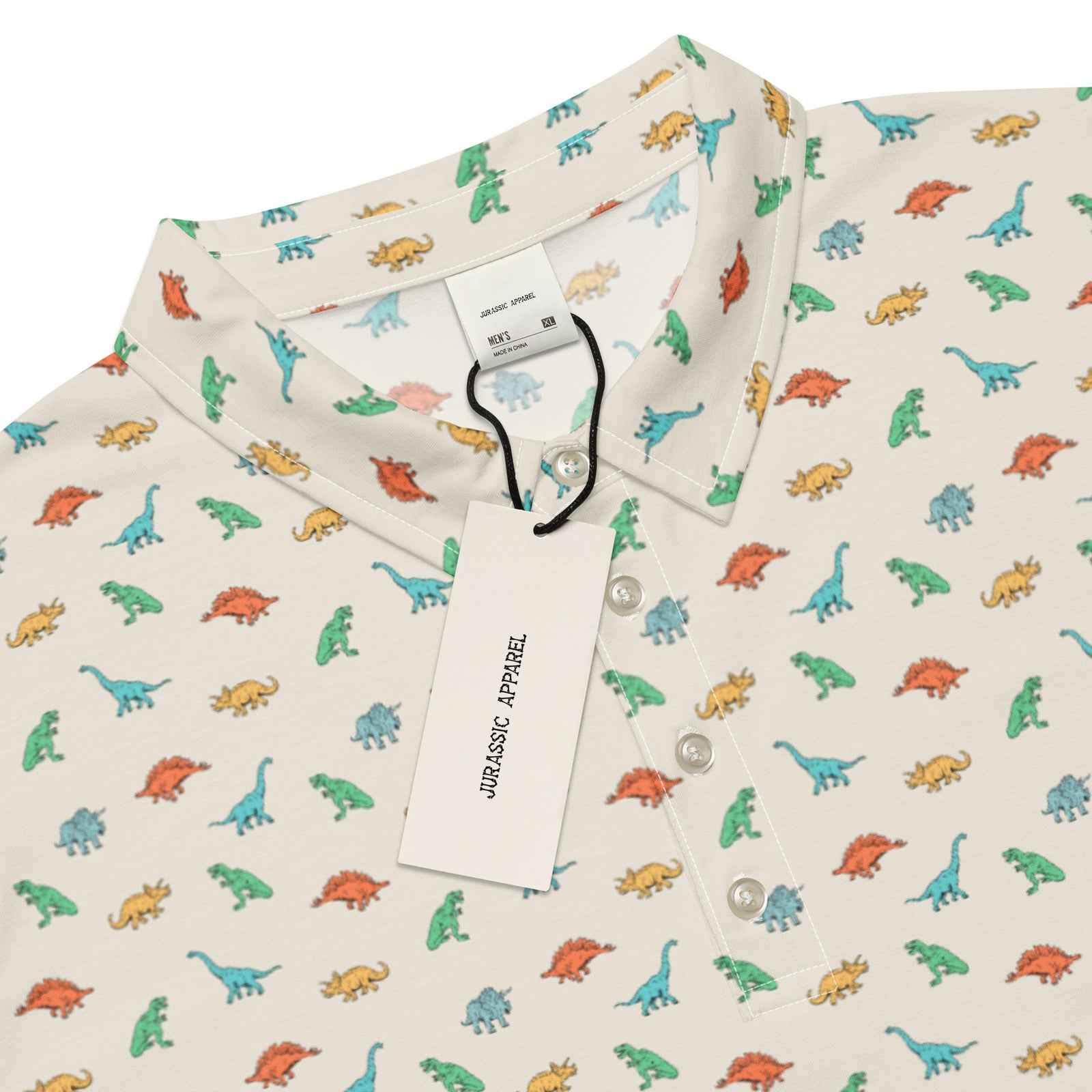
Want to show your Triceratops pride? Explore our collection of dinosaur apparel designed for people who never outgrew their dinosaur phase. Because some creatures are too iconic to forget.
Love dinosaurs? Check out our collection of dinosaur apparel — fun dinosaur shirts for the whole family. Because some of us never outgrew our dinosaur phase — and we're proud of it.
Comments will be approved before showing up.