Free Shipping On Orders over $75

0

Your Cart is Empty

Women's
  • Men's
  • Kids
  • Baby/Toddler
  • Accessories
  • Top 10 T. Rex Facts That Will Blow Your Mind (2026 Edition)

    February 28, 2026 7 min read

    Top 10 T. Rex Facts That Will Blow Your Mind (2026 Edition)

    TL;DR: T. rex wasn't just big and scary—it was a biological masterpiece. New 2026 research reveals these apex predators took 40 years to reach full size, possessed the strongest bite force of any land animal ever, and shared their ecosystem with a smaller tyrannosaur cousin called Nanotyrannus. From their surprisingly slow growth rate to their razor-sharp senses, these facts prove why Tyrannosaurus rex remains the undisputed king of dinosaurs.


    Tyrannosaurus rex. The name alone conjures images of a massive predator tearing through prehistoric forests. But how much do you really know about the king of dinosaurs?

    Thanks to groundbreaking paleontology research published in 2025 and 2026, we're rewriting what we thought we knew about T. rex. These aren't your elementary school dinosaur facts—this is cutting-edge science that reveals just how extraordinary these creatures were.

    Let's dig into the top 10 T. rex facts that showcase why this dinosaur deserves its legendary status.

    What Makes T. Rex So Special?

    Tyrannosaurus rex (meaning "tyrant lizard king") lived approximately 68 to 66 million years ago during the Late Cretaceous period. While pop culture has turned T. rex into a monster, the real animal was far more fascinating than any movie could capture.

    Recent fossil discoveries and advanced analytical techniques have revolutionized our understanding of tyrannosaur biology, behavior, and evolution. Here are the facts that matter.


    1. T. Rex Took 40 Years to Reach Full Size (New 2026 Discovery)

    Breaking research published in January 2026 completely rewrites T. rex growth patterns.

    For decades, paleontologists believed T. rex reached adult size in about 25 years. The new study from Oklahoma State University reveals the truth: it took approximately 40 years for a T. rex to reach full adult body size.

    Researchers used advanced statistical algorithms and examined bone slices under specialized light that reveals hidden growth rings—the dinosaur equivalent of tree rings. These growth rings, called "lines of arrested growth" (LAGs), show annual growth cycles.

    Why this matters: This extended growth period suggests T. rex had a much longer lifespan than previously thought, potentially living well into their 50s or 60s. It also means juvenile tyrannosaurs spent far more time as medium-sized predators before becoming the apex hunters we know.

    The study represents the most complete life history analysis ever conducted on Tyrannosaurus rex, fundamentally changing how we understand tyrannosaur development.


    2. The Strongest Bite Force of Any Land Animal—Ever

    Let's talk numbers. T. rex had a bite force estimated at 12,800 pounds (57,000 Newtons).

    To put that in perspective:

    • A great white shark: ~4,000 pounds of bite force
    • An African lion: ~650 pounds
    • A saltwater crocodile: ~3,700 pounds
    • A human: ~162 pounds

    T. rex could bite through bone like you bite through a breadstick. Paleontologists have found fossilized bones from other dinosaurs with T. rex tooth marks that show complete penetration—these predators didn't just tear flesh, they crushed skeletons.

    Their teeth—some as long as 12 inches including the root—were thick, banana-shaped, and serrated. Unlike the blade-like teeth of other predators, T. rex teeth were built for maximum bone-crushing power.


    3. Nanotyrannus Is Real—T. Rex Had a Smaller Cousin (Confirmed October 2025)

    One of the biggest paleontology debates of the past 40 years was just settled.

    In October 2025, scientists confirmed that Nanotyrannus is a distinct species, not a juvenile T. rex. This discovery, published in Nature and based on analysis of the famous "Dueling Dinosaurs" fossil, means T. rex shared its Late Cretaceous ecosystem with a smaller tyrannosaur.

    Here's what we know about Nanotyrannus:

    • Reached only about 20 feet long (compared to T. rex's 40+ feet)
    • Was a fully grown adult, not a teenage T. rex
    • Had different skull proportions and bone structure
    • Likely filled a different ecological niche as a faster, more agile predator

    This completely reframes decades of tyrannosaur research. Studies that used "Nanotyrannus" fossils to understand T. rex growth patterns were actually looking at two entirely different animals.


    4. T. Rex Could Smell Better Than Almost Any Animal on Earth

    T. rex had an enormous olfactory bulb—the part of the brain dedicated to smell.

    Brain case analysis reveals that the olfactory region in T. rex was proportionally larger than in most modern animals. Only turkey vultures have a comparable sense of smell relative to body size.

    What could T. rex smell?

    • Carrion from miles away
    • Potential prey hidden in vegetation
    • Other tyrannosaurs (important for territorial disputes)
    • Blood from injured animals

    This powerful sense of smell supported both hunting and scavenging behaviors. While debates continue about whether T. rex was primarily a hunter or scavenger, the evidence suggests it was an opportunistic apex predator that did both.


    5. Vision Like a Hawk—Seriously

    Forget the "Jurassic Park" myth about movement-based vision. T. rex had binocular vision comparable to modern birds of prey.

    Studies of skull structure show:

    • Forward-facing eyes with significant overlap in visual fields
    • Depth perception better than most modern predators
    • Visual acuity estimated at 13 times better than human vision
    • Ability to spot prey over a mile away in daylight

    That binocular vision was crucial for judging distances when attacking prey at high speed. Combined with their excellent sense of smell, T. rex had a sensory suite that made them nearly impossible to hide from.


    6. Those Tiny Arms? They Could Lift 400 Pounds Each

    The internet loves to mock T. rex arms, but those "tiny" arms were incredibly powerful.

    Each arm measured about 3 feet long and could bench press approximately 400 pounds. The biceps alone were massive—some estimates suggest they were thicker than an adult human torso.

    What were they used for?

    • Grappling prey during attacks
    • Pushing themselves up from a lying position
    • Possibly mating behaviors
    • Holding struggling prey while delivering killing bites

    Were they proportionally small? Absolutely. Were they useless? Not even close.


    7. Running Speed: Fast Enough to Terrify, Not Fast Enough to Chase Cars

    T. rex topped out at about 12-15 mph when fully grown.

    That's slower than Jurassic Park depicted, but here's the reality: at 9 tons, T. rex didn't need to run fast. Most of its prey (hadrosaurs, ceratopsians) couldn't outrun it either.

    Younger, smaller tyrannosaurs were much faster—potentially hitting 25+ mph. This created a "pack hunting by age" dynamic where juveniles could chase prey toward slower-moving adults.

    The 2026 growth study supports this: with a 40-year growth period, there were decades where individual tyrannosaurs occupied different ecological niches based on their size and speed.


    8. Skin Texture: Scales, Not Feathers (Mostly)

    T. rex was covered in scales, not feathers—at least as adults.

    While many earlier tyrannosaurs had feather-like structures, preserved skin impressions from T. rex show predominantly scaly skin. However, some paleontologists believe juveniles might have had partial feathering for insulation that was lost as they grew larger.

    The scales were:

    • Pebbly and irregular in texture
    • Similar to modern reptiles like Komodo dragons
    • Likely provided thermoregulation in the warm Cretaceous climate

    Why no feathers? At 9 tons, overheating was a bigger threat than cold. Large body mass generates and retains heat—feathers would have been a liability.


    9. Only About 30 T. Rex Alive at Any Given Time? Maybe Not.

    Here's a mind-bending stat: a 2021 study estimated that only 20,000 T. rex individuals were alive at any given time, spread across western North America.

    But the 2026 growth study challenges this. If T. rex took 40 years to reach maturity instead of 25, population dynamics shift dramatically. Longer lifespans mean:

    • More adults alive simultaneously
    • Different predator-prey ratios
    • Potentially higher total population estimates

    We're still calculating the implications, but this discovery means T. rex might have been more common than previously thought—though "common" is relative when discussing apex predators.


    10. T. Rex Brain: Smarter Than You Think

    T. rex had one of the largest brain-to-body ratios of any dinosaur.

    While not genius-level by mammal standards, tyrannosaurs were smart enough to:

    • Remember hunting territories
    • Recognize individual rivals and prey
    • Problem-solve when hunting
    • Potentially exhibit social behaviors (though this is debated)

    The enlarged olfactory and visual processing regions took up significant brain space, but the cerebral regions suggest these weren't mindless eating machines. T. rex was a sophisticated predator with advanced sensory processing and likely complex behaviors.


    Why These T. Rex Facts Matter

    Every new discovery about Tyrannosaurus rex reveals a creature far more complex than the Hollywood monster. The 2025 Nanotyrannus confirmation and 2026 growth study aren't just interesting trivia—they fundamentally reshape our understanding of Late Cretaceous ecosystems.

    T. rex wasn't just a predator. It was an apex ecosystem engineer that:

    • Regulated herbivore populations for 2+ million years
    • Shaped the evolution of prey species' defensive adaptations
    • Filled multiple ecological niches throughout its 40-year lifespan
    • Left a fossil legacy that continues to teach us about biology, evolution, and extinction

    These facts prove why T. rex remains the most studied, most famous, and most respected dinosaur in paleontology. The more we learn, the more impressive this "tyrant lizard king" becomes.


    Celebrate Your Love of T. Rex

    Whether you're a lifelong paleontology enthusiast or just discovering how incredible these creatures were, there's never been a better time to wear your dinosaur pride.

    From scientifically accurate designs to bold tributes to the king of dinosaurs, we've got apparel for people who appreciate the real T. rex—not just the movie version.

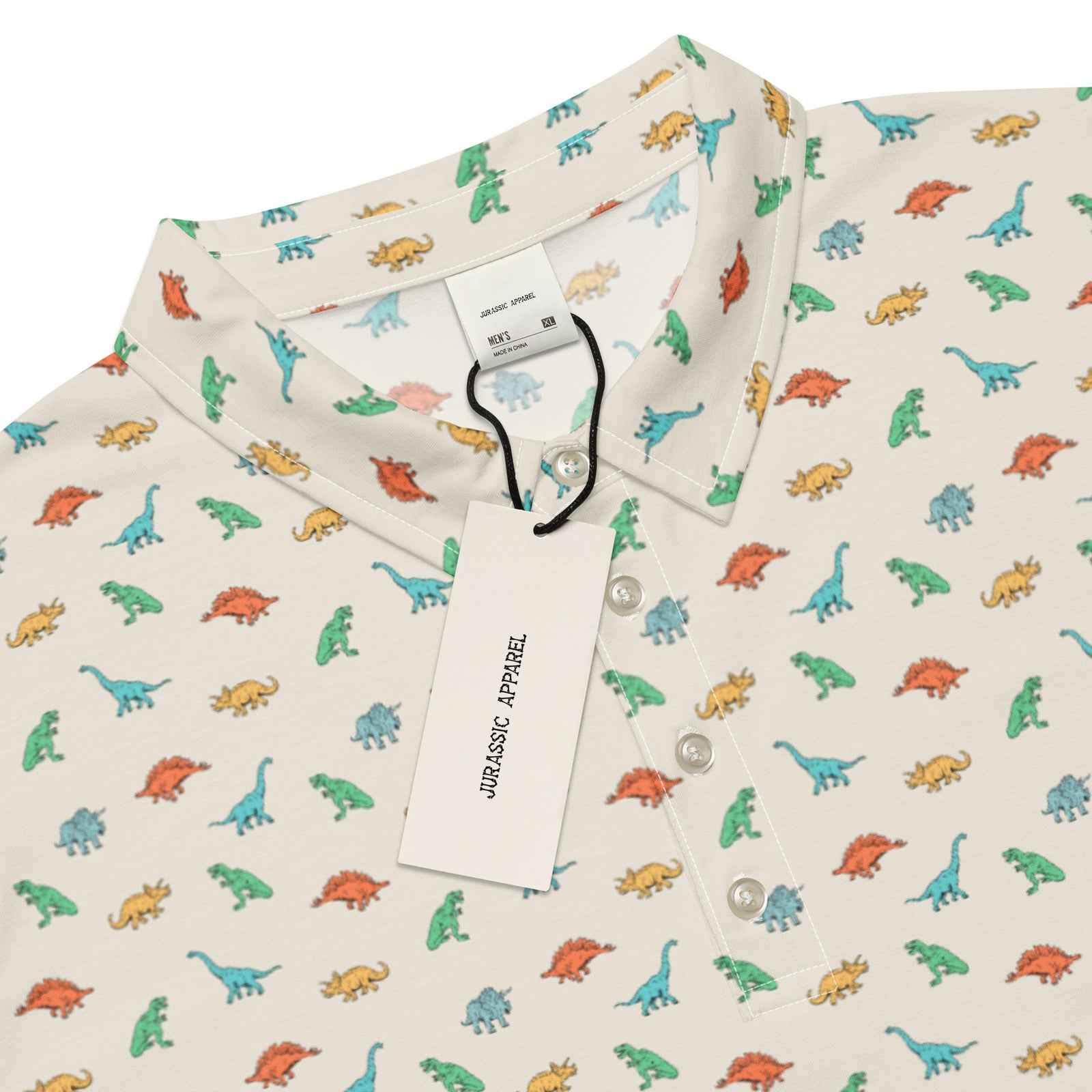
    Check out our collection of dinosaur shirts designed for fans who know the difference between Tyrannosaurus and Allosaurus. Because if you're going to rep a dinosaur, it should be the one with the strongest bite force ever recorded.


    Love dinosaurs? Check out our collection of dinosaur apparel — fun dinosaur shirts for the whole family. Because some of us never outgrew our dinosaur phase — and we're proud of it.


    Love dinosaurs? Check out our collection of dinosaur apparel — fun dinosaur shirts for the whole family. Because some of us never outgrew our dinosaur phase — and we're proud of it.

    Leave a comment

    Comments will be approved before showing up.