Free Shipping On Orders over $75
February 26, 2026 8 min read
TL;DR: New 2026 research reveals Tyrannosaurus rex took 40 years to reach full size (not 25), had a bite force that could crush a car, possessed a sense of smell rivaling house cats, and shared its territory with Nanotyrannus—a completely separate tyrannosaur species. The king of dinosaurs just got way more interesting.
Tyrannosaurus rex—the name alone sends chills down your spine. For over a century, this apex predator has dominated our imagination, from museum halls to blockbuster films. But in the last few years, cutting-edge research has completely rewritten what we thought we knew about the most famous carnivore to ever walk the Earth.
Tyrannosaurus rex: A massive carnivorous dinosaur that lived 68-66 million years ago during the Late Cretaceous period in western North America. The name translates to "king of the tyrant lizards," and it earned every syllable of that title.
This wasn't just another predator. T. rex was the apex carnivore of its ecosystem, dominating forested river valleys with a combination of raw power, keen senses, and evolutionary adaptations that made it virtually unstoppable—until the asteroid showed up.
Here's where things get fascinating. For decades, scientists believed T. rex reached full adult size around age 25. A groundbreaking 2026 study published in PeerJ completely upended that timeline.
Researchers at Oklahoma State University, led by Dr. Holly Woodward, examined 17 tyrannosaur specimens using advanced statistical algorithms and special polarized light microscopy that revealed hidden growth rings in fossilized bones—rings that previous studies had missed entirely.
The result? T. rex took approximately 40 years to reach its full-grown size of around eight tons.
"Rather than racing to adulthood, Tyrannosaurus grew more slowly and steadily than previously believed," Dr. Woodward explained in the study. This extended growth phase may have allowed younger tyrannosaurs to fill different ecological roles—essentially meaning that teenage T. rex occupied a different hunting niche than the fully-grown adults.
For four decades, paleontologists have argued over a controversial question: Were smaller tyrannosaur fossils found in Montana just juvenile T. rex, or were they a completely separate species called Nanotyrannus lancensis?
In October 2025, the debate was finally settled.
A comprehensive study published in Nature examined the "Duelling Dinosaurs" fossil—an almost complete skeleton of a smaller tyrannosaur nicknamed "Bloody Mary." The findings were definitive: Nanotyrannus is a real, distinct species that lived alongside T. rex.
Here's the proof:
Dr. Lindsay Zanno, lead author of the study, put it bluntly: "This doesn't just settle the debate. It flips decades of T. rex research on its head."
So western North America during the Late Cretaceous had at least two tyrannosaur species hunting the same ecosystems. Talk about competition.
If you've ever wondered what six tons of pressure feels like, you're in good company—and you're lucky you'll never find out firsthand.
T. rex could deliver up to six tons of bite force. To put that in perspective, that's enough pressure to crush a car. Its stiff skull channeled all the force of its massive jaw muscles into a single, devastating bite.
And those teeth? Sixty serrated, banana-sized daggers—each about eight inches long. T. rex didn't chew. It pierced, gripped, and swallowed prey whole, sometimes throwing chunks of meat into the air like a grisly toss salad.
Recent biomechanical studies revealed that T. rex could consume up to 500 pounds of meat in a single bite. That's roughly 2,000 hamburgers. One. Bite.
Both. Evidence suggests T. rex was an opportunistic apex predator—it hunted live prey when possible and scavenged carcasses when available. And yes, sometimes it even ate other T. rex. Cannibalism has been confirmed through bite marks on fossilized tyrannosaur bones.
The extended 40-year growth period discovered in 2026 adds another layer to this story. Younger, smaller tyrannosaurs likely hunted different prey than the massive adults, reducing competition within the species and allowing them to dominate multiple ecological niches simultaneously.
Sorry, Jurassic Park—T. rex wasn't chasing down speeding Jeeps.
Biomechanical modeling shows that T. rex could walk briskly at up to 12 miles per hour. Any faster, and the sheer weight of the animal would have shattered the bones in its feet.
So while it wasn't winning any sprint races, T. rex didn't need speed. With that bite force, those teeth, and an environment full of slower herbivores, it didn't have to run down prey. It just had to get close enough.
Here's a fact that sounds made up but isn't: T. rex had a sense of smell almost as sophisticated as a modern house cat.
Recent genetic studies revealed that T. rex devoted enormous portions of its brain to processing olfactory information and had nearly as many genes encoding olfactory receptors as cats do today. This powerful nose likely helped it:
Think of it as the ultimate apex predator toolkit: crushing bite force, terrifying teeth, and the ability to smell you coming from miles away.
The internet loves to mock T. rex's comically small arms, but scientists are still debating their actual function.
Several theories exist:
Recent research leans toward the third option. While the arms were proportionally small, they were heavily muscled and positioned perfectly for "vicious slashing" at close range during feeding or fighting.
So yeah, they look silly. But they probably hurt like hell.
Running eight tons of apex predator generates a lot of heat, especially when you're crushing bones with your jaws. So how did T. rex avoid overheating?
Researchers discovered vents in the skull similar to those found in modern alligators. These openings allowed air circulation around the brain, keeping it cool during intense physical activity like hunting or feeding.
Nature figured out liquid cooling systems 68 million years before we did.
Each of T. rex's 60 teeth was a masterpiece of evolutionary engineering:
Unlike mammals, which have specialized teeth for different functions, T. rex teeth were all about one job: grip and rip. The serrations helped saw through muscle and bone, while the conical shape prevented prey from escaping once bitten.
Fossil evidence shows T. rex could bite through the bones of Triceratops and hadrosaurs, leaving distinctive puncture marks that paleontologists use to identify T. rex feeding behavior millions of years later.
T. rex roamed western North America during the Late Cretaceous period, roughly 68 to 66 million years ago. Fossil evidence places them primarily in:
The environment was vastly different from today's arid landscapes. T. rex thrived in subtropical forested river valleys with warm, humid climates—think Louisiana bayou meets Yellowstone River, but with dinosaurs.
The short answer: probably not, but its close relatives did.
Early tyrannosaur species and juvenile specimens of related species show evidence of primitive feathers or feather-like structures. However, adult T. rex was so massive that feathers would have caused overheating issues.
Current consensus suggests adult T. rex likely had scaly skin with possibly some limited feathering on the back or head—but we're still waiting for a perfectly preserved specimen to settle this once and for all.
As of 2026, approximately 50 partial T. rex specimens and a handful of nearly complete skeletons have been discovered. The most famous include:
Given how rare fossilization is, these 50 specimens represent a tiny fraction of the estimated 2.5 billion T. rex individuals that lived during the species' 2-3 million year existence.
No amount of bite force, intelligence, or evolutionary adaptations could save T. rex from the catastrophic asteroid impact that struck Earth 66 million years ago.
The Chicxulub impactor—a mountain-sized asteroid or comet—slammed into what is now Mexico's Yucatan Peninsula, triggering:
T. rex, along with roughly 75% of all life on Earth, went extinct. The only dinosaurs to survive were small feathered theropods—which eventually evolved into modern birds.
Good question. Plenty of predators were just as deadly. So why does T. rex dominate our cultural imagination?
Even after more than 120 years of study, T. rex continues to surprise researchers. The 2026 growth study and 2025 Nanotyrannus confirmation prove that we're nowhere near done understanding this animal.
Current mysteries still being investigated:
Every new fossil discovery, every new analytical technique, and every application of modern technology brings us closer to understanding what it was really like when the king of dinosaurs ruled the Earth.
If you thought T. rex was already the ultimate apex predator, the latest research makes it even more formidable. Forty years of slow, steady growth allowed it to dominate multiple ecological niches. A sense of smell rivaling modern carnivores. Bite force that could crush a car. And a skull designed with built-in cooling vents.
65 million years later, we're still learning just how well-designed this killing machine really was.
And for those of us who never outgrew our dinosaur phase? That makes it even cooler.
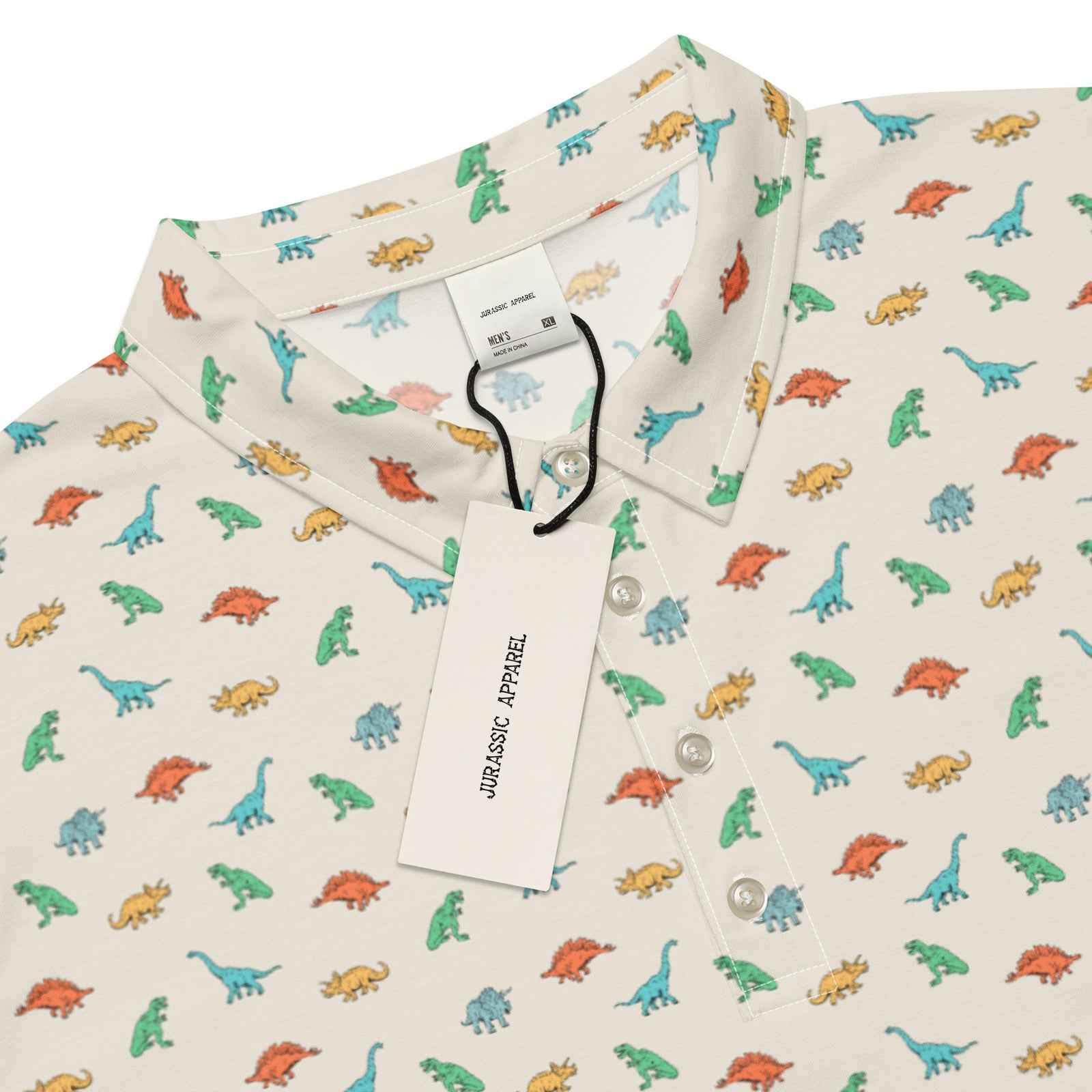
Love dinosaurs? Check out our collection of dinosaur apparel—fun dinosaur shirts for the whole family. Because some of us never outgrew our dinosaur phase—and we're proud of it.
Love dinosaurs? Check out our collection of dinosaur apparel — fun dinosaur shirts for the whole family. Because some of us never outgrew our dinosaur phase — and we're proud of it.
Comments will be approved before showing up.