Free Shipping On Orders over $75

0

Your Cart is Empty

Women's
  • Men's
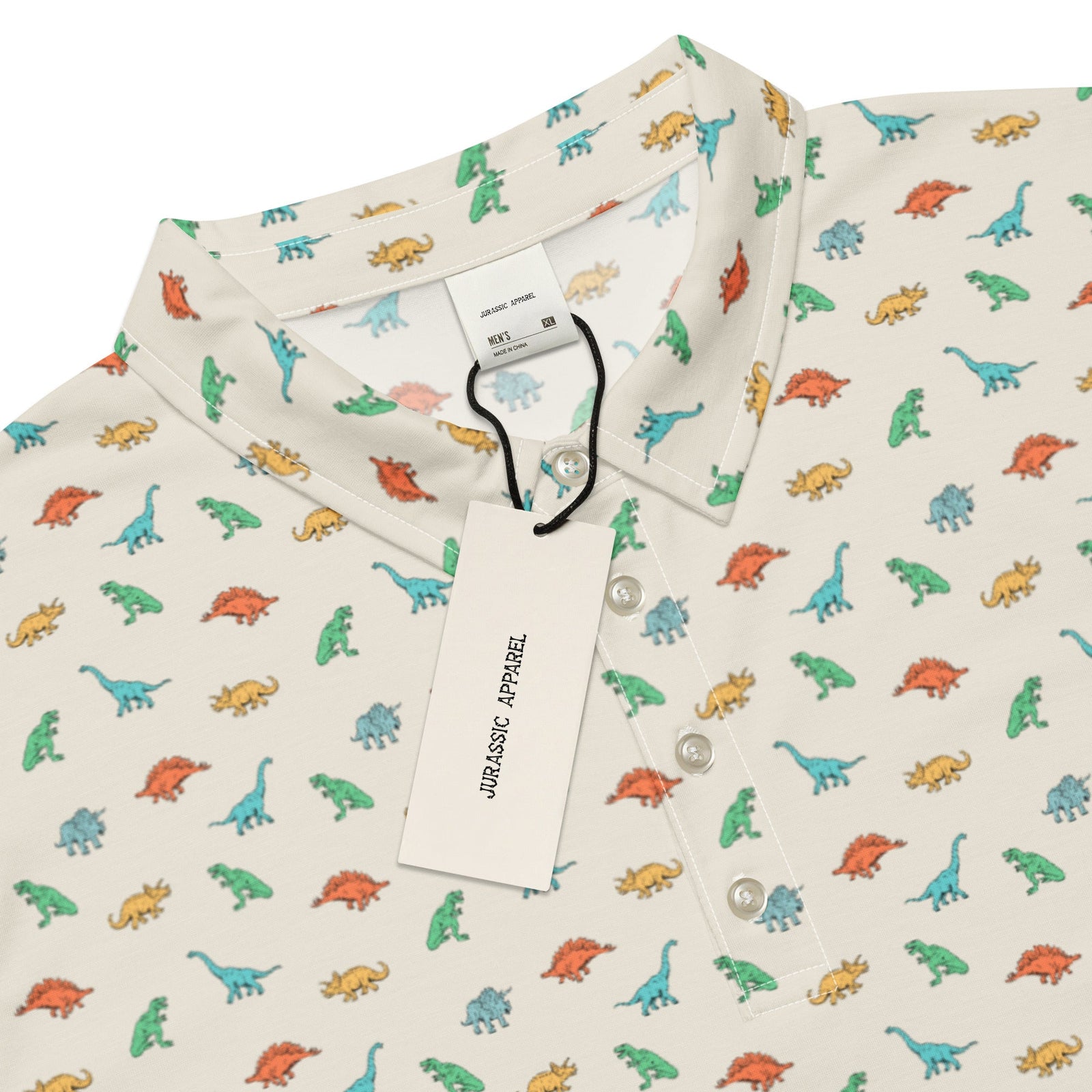
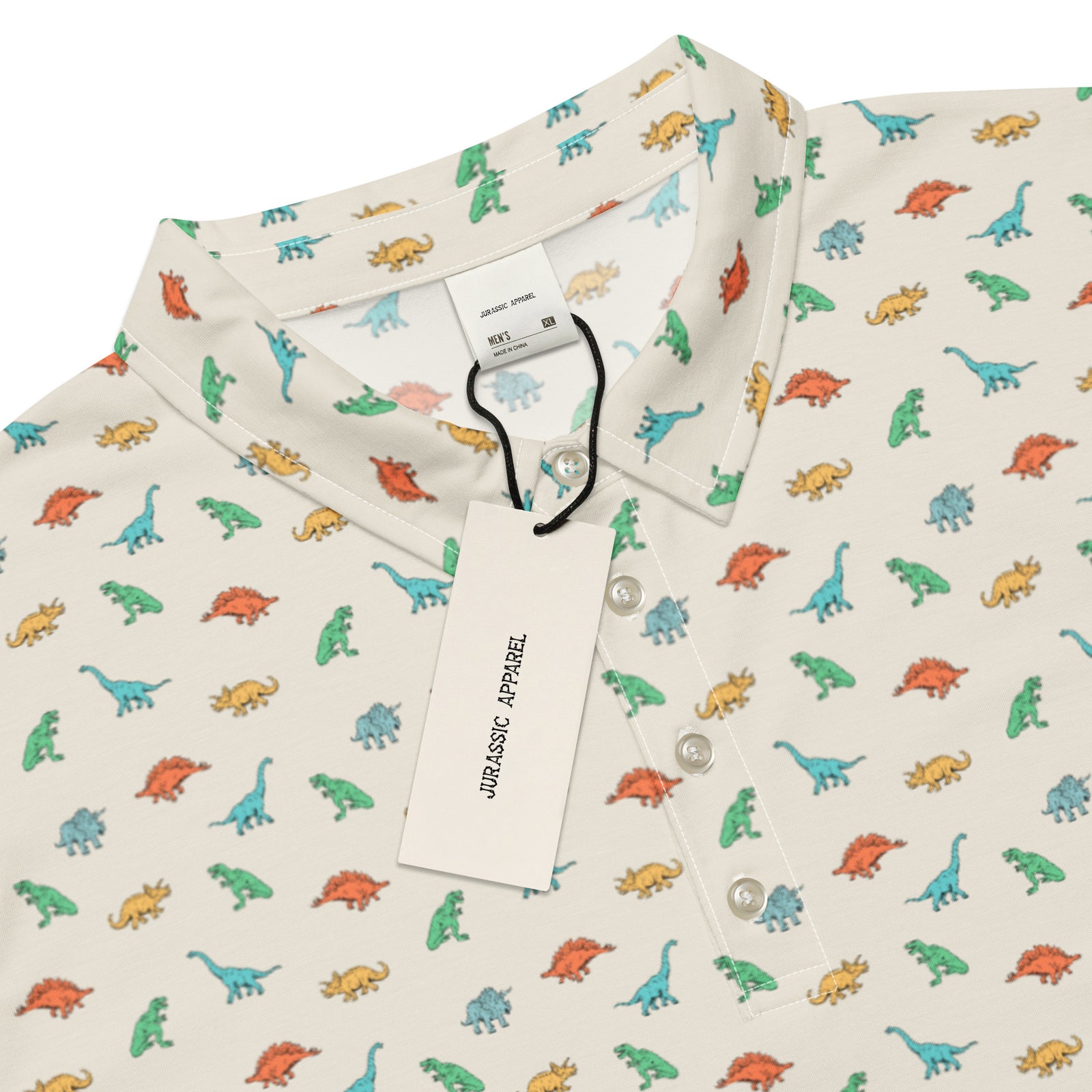
  • Polo shirt with Colorful Dino's design, detail view
  • Kids
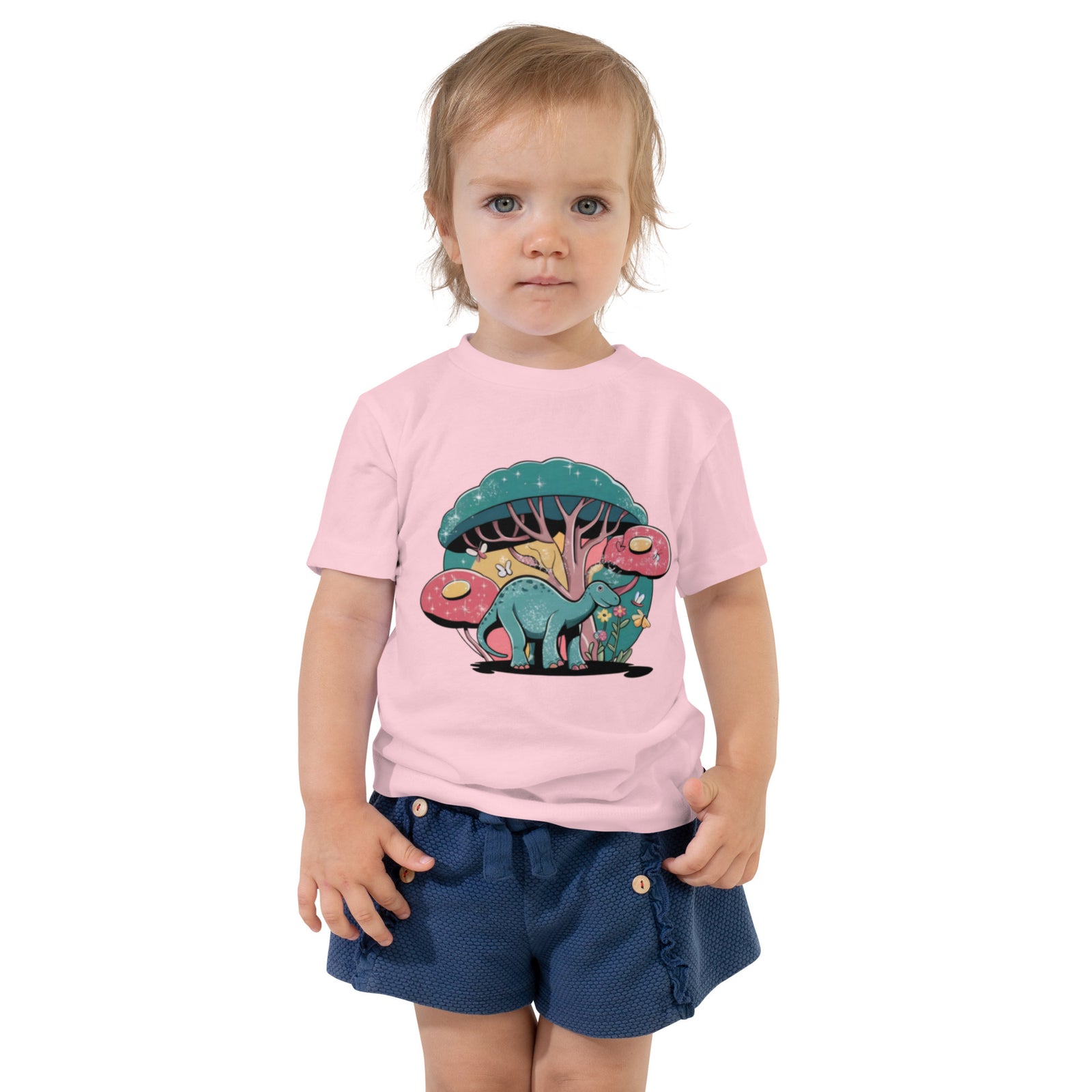
  • Toddler T-Shirt with Synthwave Dinosaur design, front view
  • Baby/Toddler
  • Toddler Pink T-Shirt with Abstract Dino Forest design, front view
  • Accessories
  • Throw blanket with Forest Guaibasaurus design, lifestyle photo
  • The T. Rex Skull: How Big It Was, Why It Has Holes, and the Famous Skulls You Can Still See

    November 19, 2026 9 min read

    You're standing under a mounted Tyrannosaurus rex and your eye goes straight to the head. A child asks how big it really was, why it's full of holes, and whether it's the real thing. The T. rex skull answers more questions about how this animal lived than any other bone. It shows how T. rex saw, smelled and bit, and how it grew up. This guide covers the size and weight, what each opening was for, what the skull tells us about the animal's senses, and the famous skulls you can still go and see.

    The T. rex skull at a glance

    Question Short answer
    How long was it? About 5 feet (1.5 m) in the largest adults. Sue's skull is about 5 feet long.
    How heavy? The real fossil skull of Sue weighs about 600 lb (272 kg). It's stone now, not bone, so the living head was lighter.
    Why all the holes? They are openings (fenestrae) for jaw muscles, air spaces and the eyes. They saved weight and anchored muscle.
    Could it see forward? Yes. A narrow snout and a wide back of the skull pointed both eyes forward, giving it overlapping (binocular) vision.
    Good sense of smell? Very. The space for its smell centres was large for a dinosaur its size.
    Strong? Built for one of the hardest bites of any land animal, with fused, reinforced bones over the snout.

    How big was a T. rex skull?

    The biggest T. rex skulls are about 5 feet (1.5 m) long. That's roughly the height of an 11-year-old, and longer than a bathtub. The Field Museum in Chicago gives Sue's skull as about 5 feet long. It's one of the largest and most complete ever found.

    Most of that length is jaw. The tooth rows run far back toward the eye. The back of the skull flares out wide, a bit like a triangle seen from above. That width matters, and it comes up again below.

    How much does a T. rex skull weigh?

    Sue's real skull is about 600 lb (272 kg). That's too heavy to bolt safely onto the mounted skeleton, so the skeleton on display wears a lightweight cast. The real skull sits in its own case nearby.

    Keep in mind that a fossil is rock. Over millions of years, minerals filled the spaces in the bone, so a fossil skull weighs more than the living head's bone did. The living skull was also full of air spaces that a fossil doesn't keep. When a skull comes out of the ground in its rock and plaster jacket, the bundle weighs a lot more. The Burke Museum's Tufts-Love Rex skull came out of Montana in 2016 in a field jacket reported at around 2,500 lb.

    Why does a T. rex skull have so many holes?

    Look at any T. rex skull and you'll see more gaps than bone. Those openings are called fenestrae (Latin for "windows"), and every one had a job.

    Opening Where What it did
    Nostril (naris) Front tip of the snout Air in. Leads back to the nasal passages and the smell centres.
    Antorbital fenestra Big opening in front of the eye Held air sacs. Saved weight without weakening the snout.
    Orbit Eye socket Held the eye. In big adults it is keyhole-shaped, with the eye in the upper part.
    Laterotemporal fenestra Behind the eye, on the side Room for jaw muscles to bulge when they contracted.
    Dorsotemporal fenestra Top of the skull, at the back Long read as a jaw-muscle anchor. A 2019 study argued it also held a blood-vessel network for shedding or holding heat, as in alligators.
    Lower-jaw opening (mandibular fenestra) Side of the lower jaw Saved weight, with muscle attached around it.

    The short version is that the holes made a huge head light enough to carry. They also gave the jaw muscles a lot of room. A solid skull 5 feet long would have been a crushing weight hanging off the front of the neck. The frame of struts and arches carried the stress of the bite and dropped everything else.

    One more opening worth knowing is the foramen magnum. It's the hole at the back of the skull where the spinal cord joined the brain. It's small and easy to miss, but it's how the head connected to the body.

    What the skull tells us about how T. rex lived

    It could see forward

    From above, a T. rex skull is narrow at the snout and wide at the back. That shape pointed the eyes forward, so the two fields of view overlapped. A 2006 study by Kent Stevens estimated the overlap at about 55 degrees, more than a modern hawk's. Overlapping vision helps judge distance, which is useful for a hunter. It also means the old "it can't see you if you stand still" idea doesn't hold up.

    It had a very good nose

    Scientists can't recover a brain from a fossil. They can, though, scan the space inside the braincase and make a cast of it, called an endocast. In T. rex, the area for the olfactory bulbs, the brain's smell centres, is large. A 2009 comparison of meat-eating dinosaurs by Darla Zelenitsky and colleagues ranked T. rex among the best smellers of the group. A strong nose suits an animal that hunted and also scavenged. It could find a carcass from far off.

    The brain was small for the body

    The braincase was a small box at the back of an enormous head. T. rex was not a genius by modern standards. Estimates of how clever it was vary widely, and scientists still argue about them. By dinosaur standards, though, it had a large brain for its body, and the parts for smell and balance were well developed.

    The skull was built for a crushing bite

    The nasal bones along the top of the snout are fused into one strong ridge, and the snout is deep and broad. That was reinforcement. T. rex bit down hard enough to crunch through bone, and fossils show it: Triceratops bones with bite marks, and fossil droppings full of bone chips. A 2019 study by Ian Cost and colleagues found that the skull was fairly stiff, without the loose joints some lizards have. That stiffness helped it handle the stress of those bites. The teeth that did the biting have their own story, told in our guide to T. rex teeth.

    Bumps, horns and scars

    Above and in front of each eye, adult T. rex skulls have roughened bony bumps. They were probably covered in keratin, the material in fingernails, in life. Their purpose is unclear; display is the usual guess. Many skulls also show injuries. Sue's lower jaw has several smooth-edged holes. They were long read as bite wounds, but a 2009 study proposed a parasite infection similar to one found in modern birds. Others still read some skull scars as wounds from fights with other tyrannosaurs.

    A young T. rex had a very different skull

    A T. rex took about two decades to reach full size, and the skull changed more than any other part of the body along the way.

    • Young animals had long, low, narrow skulls with thinner, blade-like teeth. They looked built for speed and slicing, not crushing.
    • Adults had deep, broad skulls with thick teeth and a much stronger bite.

    This matters because of an argument that has run for decades. Some small tyrannosaur skulls from the same rocks were named Nanotyrannus. One side holds they are a separate, smaller species, and the other that they are just young T. rex. A 2025 study of a well-preserved young tyrannosaur skeleton argued that Nanotyrannus was a real species, and the debate goes on. Either way, if you see a "baby T. rex" skull in a museum, read the label. Not everyone agrees on what it is.

    Famous T. rex skulls you can see

    Nickname Found Where it is now Why it's famous
    Sue South Dakota, 1990 Field Museum, Chicago One of the largest and most complete T. rex ever found. The real skull is shown on its own, next to the mount.
    AMNH 5027 Montana, 1908 American Museum of Natural History, New York Found by Barnum Brown's team. This skull shaped the classic T. rex look in books for a century.
    The Nation's T. rex Montana, 1988 Smithsonian National Museum of Natural History, Washington, D.C. A near-complete skeleton mounted in a pose of attacking a Triceratops.
    Stan South Dakota (found 1987, dug 1992) Natural History Museum Abu Dhabi Its skull is one of the best preserved known. Sold at auction in 2020 for $31.8 million.
    Tufts-Love Rex Montana, 2016 Burke Museum, Seattle A large, well-preserved skull from Hell Creek, prepared where visitors could watch.
    Scotty Saskatchewan, 1991 Royal Saskatchewan Museum, Canada One of the heaviest T. rex individuals by mass estimates.

    Two details people often ask about:

    • Is Sue's skull on the skeleton real? No. The skull on the mount is a cast, because the real one is too heavy and too valuable to risk up there. The real skull is in a case where you can look at it closely.
    • Why did Stan sell for so much? Fossils found on private land in the US can be sold legally, and a near-complete T. rex with a superb skull almost never comes up. Sue sold in 1997 for about $8.4 million, which was a record at the time. Stan's 2020 sale set a new one. Fossils found on US federal land belong to the public and can't be sold.

    Can you buy a T. rex skull?

    Not a real one, unless you have millions to spend and the fossil came from private land. Almost everything sold as a "T. rex skull" online is a cast or replica, usually resin, made from a mould of a museum specimen. Some are life size and some are small enough for a shelf. A good listing will say which specimen it was cast from and how big it is. If a cheap skull is described as "real fossil", be wary. At most, a product like that has a few real fossil fragments set into a cast.

    We don't sell fossils or casts. What we make are the designs below, for people who'd rather wear a T. rex skull than dust one.

    T. rex skull and skeleton designs from Jurassic Apparel

    If a museum trip turned someone into a skull person, these all carry the shape:

    Everything is printed to order, so allow for production time on top of shipping. Each product page lists the current estimate.

    T. rex skull facts for kids

    1. The biggest T. rex skulls were about 5 feet long. That's as long as a grown-up is tall, or close to it.
    2. Sue's real fossil skull weighs about 600 pounds, as much as three or four grown-ups.
    3. The skull has big holes in it called fenestrae, which means "windows". They made the head lighter.
    4. T. rex's eyes faced forward, so it could judge distances well, like an owl or a hawk.
    5. It had a super nose. The part of its brain for smelling was big.
    6. Its brain was small compared with its huge head.
    7. The bones on top of its snout were joined together to make them strong for biting.
    8. Baby T. rex had long, skinny skulls. They got big and chunky as they grew up.
    9. Sue's skull is so heavy that the skeleton in the museum wears a lighter copy.
    10. A T. rex skeleton called Stan sold for $31.8 million, more than most houses.

    Want more? Find out what all that bite was for in our post on what T. rex really ate.

    FAQ

    How big is a T. rex skull? The largest are about 5 feet (1.5 m) long. Sue's skull at the Field Museum is about 5 feet long. Young animals had much smaller, narrower skulls.

    How much does a T. rex skull weigh? Sue's fossil skull weighs about 600 lb (272 kg). A fossil is mineralised, so it's heavier than the living bone was. The living head, with its air spaces, was lighter for its size.

    Why does the T. rex skull have holes in it? The openings, called fenestrae, made room for jaw muscles, held air sacs, and cut weight. A solid skull that size would have been too heavy to carry well.

    Did T. rex have good eyesight? Its eyes pointed forward, giving it overlapping vision of about 55 degrees by one estimate. That's good for judging distance. There's no evidence that it could only see moving things.

    Is the skull on Sue's skeleton real? No. The mounted skeleton wears a cast. The real skull is displayed separately at the Field Museum in Chicago.

    Can you buy a real T. rex skull? Real ones are extremely rare and sell for millions. Stan's skeleton sold for $31.8 million in 2020. Nearly every T. rex skull for sale is a resin cast or replica. Fossils from US federal land can't be sold at all.

    What's the most complete T. rex skull? Sue and Stan are the two most often named. Stan's skull is widely described as one of the best preserved ever found.

    The short answer

    A T. rex skull is a lightweight, reinforced frame about 5 feet long. It's full of openings for muscles and air, with forward-facing eyes, a big nose and a bite built to crush bone. If you want to see one, the Field Museum's Sue is the place to start. If you'd rather take one home, start with the Dino Skull iPhone case.

    Leave a comment

    Comments will be approved before showing up.