Free Shipping On Orders over $75

0

Your Cart is Empty

Women's
  • Men's
  • Kids
  • Baby/Toddler
  • Accessories
  • New Dinosaur Discovery: Every Major Find From 2025–2026 (Updated)

    February 26, 2026 7 min read

    New Dinosaur Discovery: Every Major Find From 2025–2026

    TL;DR: Scientists described 44 new dinosaur species in 2025 alone — nearly one per week. In early 2026, a brand-new Spinosaurus species with a scimitar-shaped head crest was unearthed in the Sahara, a Chinese dinosaur was found with never-before-seen hollow skin spikes, and researchers confirmed that Nanotyrannus is not a juvenile T. rex. We're living in the golden age of dinosaur paleontology, and the pace is only accelerating.


    Paleontology had a problem for most of its existence: not enough dinosaurs.

    That problem is gone.

    In the last two decades, the rate of new dinosaur discovery has accelerated so dramatically that we now know roughly 1,400 species from over 90 countries. The year 2025 added 44 more to the list. And 2026 is already dropping bombshells just weeks into the year.

    If you haven't been keeping up, you're behind. Here's everything you need to know about the most significant new dinosaur discoveries — what was found, where, and why it matters.

    What Are the Biggest New Dinosaur Discoveries of 2026?

    We're barely two months into 2026 and paleontologists are already rewriting textbooks.

    Spinosaurus mirabilis — A New "Hell Heron" From the Sahara

    What: A brand-new species of Spinosaurus discovered in Niger's Sahara Desert.

    Why it matters: Spinosaurus mirabilis was roughly 40 feet long and weighed 5–7 tons, making it one of the largest meat-eating dinosaurs ever found. But the real headline is its anatomy — a large, scimitar-shaped bony crest on top of its head and interlocking teeth perfectly designed for snagging slippery fish.

    Researchers described it as a "hell heron" — picture a wading bird the size of a school bus, striding into rivers to catch fish the size of adult humans. The species lived roughly 95 million years ago in what was then a forested, river-rich environment (not the barren desert it is today).

    This discovery reshapes our understanding of spinosaurid diversity. We used to think Spinosaurus was one weird outlier among theropods. Now it's clear there was an entire lineage of giant semi-aquatic predators diversifying across ancient Africa.

    Haolong dongi — The Dinosaur With Hollow Spikes in Its Skin

    What: A 125-million-year-old juvenile iguanodontian discovered in China with fossilized skin so well-preserved that individual cells are still visible.

    Why it matters: Haolong dongi has something no other dinosaur — or any known animal, living or extinct — has ever been documented with: hollow, cutaneous spikes growing directly from its skin. Not armor plates. Not bony scutes. Hollow spikes made of skin tissue.

    This is a completely unprecedented feature in the vertebrate fossil record. The preservation is so exceptional that scientists could study the skin at a cellular level, revealing structures that challenge existing models of how dinosaur integument evolved.

    T. rex Growth Rewritten — They Lived Longer Than We Thought

    What: A January 2026 study by Holly Woodward and colleagues assembled the largest dataset of T. rex bone histology ever compiled — 17 specimens.

    Why it matters: Previous models suggested T. rex hit full size within about 20 years and lived to around 28. The new analysis reveals they grew far more slowly, reaching their full eight-ton size around age 40. That's roughly 15 years longer than we believed.

    > Tyrannosaurus rex growth trajectory (revised): Rather than sprinting to adulthood, T. rex appears to have grown slowly and steadily, with a protracted subadult phase. This extended adolescence may have allowed younger tyrannosaurs to fill different ecological roles than adults — essentially functioning as different "species" within the same ecosystem at different life stages.

    The study also flagged that some specimens traditionally classified as T. rex may actually belong to other species, adding fuel to the long-running Nanotyrannus debate.

    What Were the Most Important Dinosaur Discoveries of 2025?

    The year 2025 was a landmark year. Here are the discoveries that made paleontologists audibly gasp.

    Zavacephale rinpoche — The Oldest Dome-Headed Dinosaur

    What: A one-meter-long plant-eating dinosaur from 110-million-year-old rocks in Mongolia's Gobi Desert.

    Why it matters: Zavacephale is the oldest known pachycephalosaur — those iconic dome-headed dinosaurs famous for head-butting like bighorn sheep. The group has long been one of the most poorly understood dinosaur families because their fossils are notoriously incomplete.

    > Pachycephalosaur: A group of bipedal, herbivorous dinosaurs characterized by thick, domed skulls made of solid bone, likely used for intraspecific combat (fighting members of their own species). They lived during the Late Cretaceous, roughly 85–66 million years ago — until Zavacephale pushed that range back to 110 million years.

    This skeleton was so complete and so stunning that when first shown at academic conferences, it drew audible gasps from experienced paleontologists. The skull suggests that pachycephalosaur domes grew faster than the rest of their bodies — a totally new insight into their development.

    Istiorachis macarthurae — The Sail-Backed Surprise From England

    What: A six-meter-long herbivorous ornithopod from the Isle of Wight, about 128 million years old.

    Why it matters: Istiorachis had a striking sail-like structure running along its back — probably a display feature used to attract mates and look intimidating to predators. It was named by Jeremy Lockwood, a retired doctor who pivoted to paleontology and has since named three new dinosaur species from the Isle of Wight.

    The Isle of Wight has produced dinosaur fossils for nearly 200 years, yet researchers keep finding entirely new species in its eroding Cretaceous cliffs. That fact alone tells you how much we still don't know.

    Nanotyrannus Confirmed as Its Own Species

    What: A November 2025 study conclusively demonstrated that Nanotyrannus is not a juvenile T. rex — it's a separate species entirely.

    Why it matters: This debate has raged in paleontology for decades. Many scientists argued that Nanotyrannus specimens were simply young T. rex individuals. The new analysis, led by researchers at Stony Brook University using the famous "Dueling Dinosaurs" fossil, showed that for Nanotyrannus to be a juvenile T. rex, "it would need to defy everything we know about vertebrate growth."

    The implications are huge. If Nanotyrannus is its own species, then some fossils previously used to model T. rex growth and behavior were actually from a completely different animal. Years of T. rex research may need revision.

    Spicomellus — The Most Armored Dinosaur Gets Even Weirder

    Originally named in 2021 from a single bizarre rib found in 165-million-year-old Moroccan rocks, Spicomellus afer had bony spines literally fused to its ribcage — a feature found in no other animal, living or extinct. In 2025, new fossil material revealed even more about this deeply strange creature, confirming it as one of the most heavily armored dinosaurs that ever lived.

    First Dinosaur Fossils Found in Serbia

    In a surprise discovery, paleontologists reported the first-ever dinosaur fossils from Serbia in 2025. While countries like Argentina, China, and the United States are well-known dinosaur hotspots, finds like this remind us that the fossil record has enormous gaps waiting to be filled — sometimes in the most unexpected places.

    How Many New Dinosaur Species Are Discovered Each Year?

    The numbers might surprise you.

    Current rate: Roughly 40–50 new dinosaur species are described annually, nearly one per week. The year 2025 saw 44 new species described.

    Total known species: Around 1,400 dinosaur species have been formally described from over 90 countries.

    Historical trend: The rate of discovery has accelerated dramatically since the early 2000s. More new species have been named in the last 25 years than in the entire previous history of paleontology. This is partly due to new fossil-rich sites opening up in China, Argentina, and Africa, and partly because of improved analytical techniques like CT scanning and histological analysis.

    > Why the acceleration? Three factors: (1) more paleontologists working in more countries, (2) better technology for analyzing fossils without destroying them, and (3) increased funding and public interest creating a positive feedback loop. When dinosaurs are in movies and museums, people fund more digs. More digs find more dinosaurs. More dinosaurs fuel more movies and museum exhibits.

    Where Are Most New Dinosaurs Being Found?

    The traditional hotspots remain dominant:

    • Argentina — Patagonia continues to produce spectacular titanosaur and theropod finds. A new titanosaur species, Yeneen houssayi, was described from Patagonia in January 2026.
    • China — Leads the world in feathered dinosaur discoveries and exceptionally preserved specimens. The 2026 Haolong dongi find is just the latest example.
    • Mongolia — The Gobi Desert remains one of the richest dinosaur graveyards on Earth.
    • United States — The western states (Montana, Utah, Wyoming) continue producing tyrannosaur, ceratopsian, and hadrosaur fossils at a steady clip.
    • Africa — Niger, Morocco, and other North African countries are emerging as major contributors, especially for spinosaurid and early dinosaur evolution.

    But the surprises are coming from unexpected places: Serbia, Scotland, Spain (Foskeia pelendonum, a new rhabdodontomorph described in early 2026), and even India are producing significant finds.

    Why Do New Dinosaur Discoveries Matter?

    Every new species isn't just a name on a list. Each one reshapes our understanding of:

    • Evolutionary relationships — New species fill in gaps on the dinosaur family tree, sometimes completely rearranging branches we thought were settled.
    • Paleoecology — Understanding what dinosaurs lived where, and alongside which other species, tells us about ancient ecosystems and climates.
    • Biology — Discoveries like Haolong dongi's hollow skin spikes reveal anatomical features we never knew were possible, expanding our understanding of vertebrate biology as a whole.
    • Our own future — Dinosaurs dominated Earth for 165 million years across multiple climate shifts and mass extinction events. Understanding how they adapted (and ultimately didn't) has real implications for how we think about biodiversity in a changing climate.

    We're living in what researchers call a "golden era" of dinosaur science. The tools are better, the sites are more accessible, and the pace shows no sign of slowing down.

    If you grew up thinking we'd already found all the dinosaurs, you were wrong. The best discoveries might still be buried in rock somewhere, waiting for a brush and a very patient scientist.


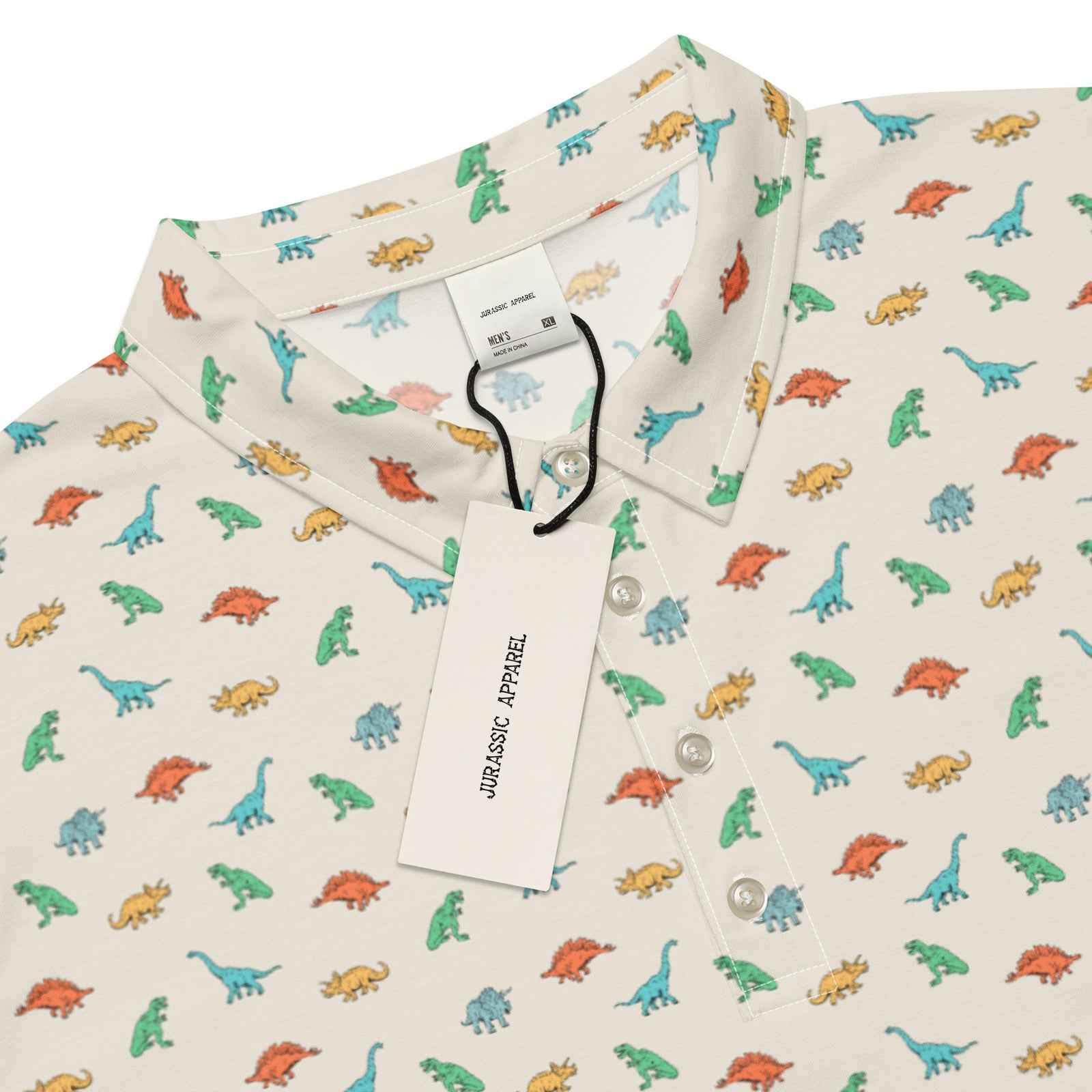
    Never outgrew your dinosaur phase? Neither did we. Check out our collection of dinosaur apparel — fun dinosaur shirts for the whole family. Because some of us never outgrew our dinosaur phase — and we're proud of it.


    Love dinosaurs? Check out our collection of dinosaur apparel — fun dinosaur shirts for the whole family. Because some of us never outgrew our dinosaur phase — and we're proud of it.

    Leave a comment

    Comments will be approved before showing up.