Free Shipping On Orders over $75

0

Your Cart is Empty

Women's
  • Men's
  • Kids
  • Baby/Toddler
  • Accessories
  • T-Rex Facts: Everything You Need to Know About the King of Dinosaurs

    March 27, 2026 11 min read

    T-Rex Facts: Everything You Need to Know About the King of Dinosaurs

    TL;DR: Tyrannosaurus rex lived 68-66 million years ago during the Late Cretaceous period in what's now North America. This apex predator stood 12-13 feet tall at the hip, stretched 40+ feet long, and possessed the most powerful bite force of any land animal — ever. Despite those famously tiny arms, T-Rex was a sophisticated hunter with exceptional sensory capabilities, binocular vision, and possibly feathered integument. Modern paleontology reveals a creature far more complex than early reconstructions suggested.


    What Does "Tyrannosaurus Rex" Mean?

    The name "Tyrannosaurus rex" translates to "tyrant lizard king" — a fitting title for the apex predator that ruled North America during the final chapter of the Mesozoic Era.

    The genus name Tyrannosaurus derives from the Greek words "tyrannos" (tyrant) and "sauros" (lizard). The species name rex is Latin for "king." Paleontologist Henry Fairfield Osborn coined the name in 1905, recognizing immediately that this creature represented something extraordinary in the fossil record.

    That royal designation proved prophetic. T-Rex has become the most famous dinosaur in history — the face of paleontology, the star of blockbuster films, and the dinosaur even non-enthusiasts can identify on sight. Its cultural dominance mirrors its ecological dominance 66 million years ago.


    How Big Was T-Rex?

    Tyrannosaurus rex ranks among the largest terrestrial carnivores in Earth's history, though modern paleontology has refined our understanding of its actual dimensions.

    Height, Length, and Weight

    Standing height: 12-13 feet at the hip when standing upright (roughly equivalent to a two-story building)

    Total length: 40-43 feet from snout to tail tip (about the length of a city bus)

    Weight: 8,000-15,000 pounds (4-7.5 tons) — comparable to a modern African elephant

    The largest known T-Rex specimen, nicknamed "Scotty," weighed an estimated 19,555 pounds (8.87 metric tons) when alive. Discovered in Saskatchewan, Canada, Scotty represents the upper size limit for the species — a true heavyweight champion among tyrannosaurs.

    Size Variation and Sexual Dimorphism

    Not all T-Rexes were created equal. Paleontologists have documented significant size variation among specimens, with some individuals nearly 30% larger than others of similar age.

    Some scientists propose sexual dimorphism — the possibility that one sex (likely females) grew substantially larger than the other, similar to many modern bird species. Female T-Rexes may have required extra bulk for egg production, while males remained more agile for territorial displays and hunting.

    However, this remains debated. The limited sample size of complete specimens makes definitive conclusions difficult.

    Growth Rates

    Juvenile T-Rexes looked dramatically different from adults. Young tyrannosaurs had proportionally longer legs, narrower skulls, and blade-like teeth — adaptations for speed and slicing rather than bone-crushing power.

    T-Rex experienced explosive growth during adolescence. Studies of bone histology reveal that individuals gained up to 1,700 pounds per year during their teenage growth spurt (ages 14-18). This rapid maturation allowed them to quickly reach hunting-effective size in a dangerous Cretaceous ecosystem.

    Most T-Rexes didn't survive past 30 years. Scotty lived to approximately 28-30 years, making him one of the oldest known specimens.


    How Fast Could T-Rex Run?

    The question of T-Rex speed has generated decades of scientific debate and spectacular Hollywood chase scenes. Modern biomechanical analysis provides surprising answers.

    Walking Speed vs. Sprint Speed

    Sustained walking speed: 10-15 mph — comparable to a human jogging pace

    Maximum sprint speed: 12-17 mph (estimated) — faster than most humans but nowhere near Jurassic Park's terrifying pursuits

    Computer simulations accounting for T-Rex's massive weight, leg proportions, and tail dynamics suggest it was physically impossible for adult tyrannosaurs to achieve speeds above 20 mph without catastrophic bone stress. A full-speed fall would likely result in fatal injuries for a multi-ton biped.

    Speed Relative to Prey

    T-Rex didn't need Olympic sprinting capabilities. Its primary prey — Triceratops, Edmontosaurus, and other megaherbivores — were even slower. A 15 mph predator chasing a 10 mph hadrosaurid represents an overwhelming speed advantage.

    Additionally, T-Rex possessed exceptional acceleration for short bursts. Like modern ambush predators, it likely relied on stalking tactics and explosive closing speed rather than sustained chases.

    Younger, lighter T-Rexes could move faster. Juvenile tyrannosaurs may have reached 25+ mph, occupying a different ecological niche as mid-sized pursuit predators before transitioning to heavyweight apex predator status in adulthood.


    What Was T-Rex's Bite Force?

    Tyrannosaurus rex possessed the most powerful bite force of any terrestrial animal in Earth's history — a crushing strength that fundamentally defined its hunting strategy and ecological role.

    The Numbers

    Biomechanical studies estimate T-Rex's maximum bite force at 12,800 pounds per square inch (PSI) — roughly equivalent to the weight of three cars pressing down on a single square inch.

    For comparison:

    • Modern alligators: ~2,500 PSI
    • Great white sharks: ~4,000 PSI
    • Hippos: ~1,800 PSI
    • Human bite: ~150-200 PSI

    No living animal approaches T-Rex's bite strength. Only prehistoric competitors like Deinosuchus (a giant crocodilian) and large mosasaurs generated comparable crushing power.

    Teeth Built for Destruction

    T-Rex teeth weren't just large (up to 12 inches including the root) — they were engineered for a specific purpose: penetrating bone.

    Unlike the blade-like slicing teeth of most theropods, tyrannosaur teeth were thick, conical, and deeply rooted. They functioned like biological railroad spikes, driven through bone by hydraulic jaw muscles powerful enough to crush a compact car.

    These teeth had serrated edges for cutting flesh, but their real advantage was structural durability. T-Rex could bite completely through the pelvis of a Triceratops without shattering its own teeth — a feat impossible for blade-toothed predators.

    Feeding Behavior

    T-Rex swallowed chunks whole. Unlike mammals that chew, tyrannosaurs ripped off large pieces of flesh and bone, then gulped them down.

    Paleontologists have discovered fossilized Triceratops bones with T-Rex tooth marks that healed — evidence that some prey survived attacks. Other bones show bite marks that penetrated completely through hip bones and spinal vertebrae.

    Perhaps most remarkably, T-Rex coprolites (fossilized feces) contain bone fragments — direct proof that tyrannosaurs digested the bones of their prey, extracting every possible calorie from kills.


    Did T-Rex Have Feathers?

    This question represents one of modern paleontology's most fascinating controversies — and a direct challenge to decades of pop culture imagery.

    The Evidence

    We know with certainty that many tyrannosaurs had feathers. Fossil discoveries of tyrannosaur relatives from China, including Yutyrannus huali (a 30-foot, feathered tyrannosaur), demonstrate that feathered integument was widespread in the Tyrannosauridae family.

    Yutyrannus lived approximately 125 million years ago — 60 million years before T-Rex — but its preserved feather impressions proved that large tyrannosaurs could and did possess feathered coats.

    Did T-Rex Specifically Have Feathers?

    The honest answer: We don't know for certain.

    Arguments for T-Rex having feathers:

    • Phylogenetic bracketing suggests it inherited feathers from feathered ancestors
    • Juvenile T-Rexes may have required insulation
    • Feathers could serve display functions (intimidation, mate attraction) even if not needed for warmth
    • Some paleontologists believe feathers on the head, neck, and back are likely

    Arguments against widespread feathering:

    • T-Rex lived in a warmer climate than Yutyrannus
    • Larger body size means better heat retention (elephants and rhinos lack fur for this reason)
    • No T-Rex specimen has preserved feather impressions (though preservation is extremely rare)
    • Skin impressions from some T-Rex specimens show scales, not feathers

    Most Likely Scenario

    The emerging consensus suggests T-Rex probably had a combination of both: scales on much of the body (especially the legs and tail) with possible feathers or feather-like filaments on the head, neck, shoulders, and back.

    This mixed covering would allow for thermoregulation while providing display structures — similar to how male turkeys have mostly featherless heads but elaborate plumage elsewhere.

    Juvenile T-Rexes almost certainly had more extensive feathering than adults, shedding coverage as they grew and their heat retention improved.


    What Did T-Rex Eat?

    Tyrannosaurus rex was an apex predator and facultative scavenger — meaning it both hunted live prey and scavenged carcasses opportunistically.

    Primary Prey

    T-Rex's diet consisted primarily of:

    Triceratops — The most common herbivore in Hell Creek Formation fossils shows frequent T-Rex bite marks. Fossil evidence includes healed wounds (failed attacks) and lethal skull punctures.

    Edmontosaurus — Large hadrosaurid (duck-billed) dinosaurs provided abundant meat with less defensive armament than ceratopsians.

    Ankylosaurus — Heavily armored, but juveniles or injured adults would have been vulnerable targets.

    Other prey likely included juvenile sauropods, smaller ornithischians, and potentially other tyrannosaurs (evidence suggests occasional cannibalism).

    Hunter vs. Scavenger Debate

    For decades, some paleontologists argued T-Rex was primarily a scavenger — too slow and cumbersome to hunt effectively. Modern evidence overwhelmingly supports T-Rex as an active predator:

    • Binocular vision (see below) indicates an animal adapted for tracking moving prey
    • Exceptional sense of smell served both hunting and scavenging
    • Large leg muscles relative to body size indicate hunting capability
    • Bite marks on prey animals that healed demonstrate attacks on living targets
    • Tooth marks on Triceratops face shields suggest frontal attacks on alert, defensive prey

    That said, T-Rex absolutely scavenged when opportunities arose. In a harsh Cretaceous ecosystem, no large predator would ignore free calories.

    Feeding Efficiency

    T-Rex was built for calorie extraction. Its bone-crushing bite allowed access to marrow — the most calorie-dense tissue in a carcass. This gave tyrannosaurs a competitive advantage: they could fully exploit kills that other predators could only partially consume.

    Studies suggest an adult T-Rex required up to 40,000 calories per day — roughly equivalent to eating 200 pounds of meat. A single Edmontosaurus kill could provide 10+ days of food.


    How Good Was T-Rex's Eyesight?

    Tyrannosaurus rex had some of the best vision of any predatory dinosaur — a fact that demolishes the Jurassic Park myth about "don't move and it can't see you."

    Binocular Vision

    T-Rex possessed binocular vision — overlapping fields of view from both eyes that enable depth perception. This visual arrangement is characteristic of pursuit predators, not scavengers.

    The visual field overlap measured approximately 55 degrees, comparable to modern hawks and superior to most mammals (humans have ~120 degrees of overlap, but from a different skull configuration).

    Binocular vision means T-Rex could:

    • Judge distances accurately for attacks
    • Track fast-moving prey
    • Navigate complex terrain at speed
    • Detect subtle movements across landscapes

    Visual Acuity

    Estimates suggest T-Rex visual acuity approached 13 times better than human vision — roughly equivalent to an eagle. It could distinguish details at much greater distances than mammals.

    This exceptional eyesight worked in concert with:

    • Huge eye sockets (up to 4 inches across) allowing large eyeballs
    • Forward-facing eye placement optimizing binocular overlap
    • Large optic nerve openings in skull fossils indicating substantial visual processing capability

    Low-Light Vision

    Some paleontologists theorize T-Rex may have hunted during twilight or nighttime hours when large herbivores were most vulnerable. The proportions of its eye sockets suggest capability for low-light vision, though this remains speculative.


    What About Those Tiny Arms?

    T-Rex's arms measured only 3 feet long on a 40-foot body — proportionally smaller than human arms relative to body size. This anatomical peculiarity has puzzled paleontologists and inspired countless memes.

    Arms vs. Jaws: A Functional Trade-Off

    T-Rex's skull was massive — up to 5 feet long, housing the most powerful bite force ever measured. Supporting this crushing capability required enormous neck and jaw muscles.

    Something had to give. In evolutionary terms, T-Rex invested overwhelmingly in bite force over grasping capability. The arms became vestigial as the jaws took over all predatory functions.

    Other large theropods made different trade-offs:

    • Allosaurus: Moderate bite force, long slashing arms with hooked claws
    • Spinosaurus: Specialized jaws for fishing, long arms for aquatic hunting
    • Carnotaurus: Reduced arms even more than T-Rex (to the point of near uselessness)

    Possible Arm Functions

    Despite their comically small size, T-Rex arms were not useless:

    Powerful musculature: Fossil evidence shows robust arm muscles. Each arm could potentially lift 400+ pounds — far beyond what's needed for a vestigial structure.

    Sharp claws: Two-fingered hands ended in curved, hooked claws capable of gripping.

    Possible functions include:

    • Gripping prey during feeding (though jaws did most of the work)
    • Providing leverage when standing up from a resting position
    • Holding mates during mating (similar to modern crocodiles)
    • Inflicting slashing wounds during close-quarters combat with other tyrannosaurs

    The truth? We don't know exactly what T-Rex used its arms for — but their musculature suggests they retained some functional purpose.


    Where and When Did T-Rex Live?

    Tyrannosaurus rex roamed North America during the Late Cretaceous period, 68-66 million years ago — making it one of the last non-avian dinosaurs before the K-Pg extinction event.

    Geographic Range

    T-Rex fossils have been discovered across:

    • Montana
    • South Dakota
    • Wyoming
    • North Dakota
    • Colorado
    • Texas
    • Saskatchewan (Canada)
    • Alberta (Canada)

    The most productive fossil formation for T-Rex remains is the Hell Creek Formation spanning Montana, North Dakota, South Dakota, and Wyoming.

    Interestingly, T-Rex was endemic to North America. No confirmed T-Rex fossils have been found on other continents. Its closest Asian relative was Tarbosaurus bataar from Mongolia — similar in size and appearance but technically a different species.

    Climate and Environment

    T-Rex's world was dramatically different from modern North America:

    Climate: Warm and humid, with no polar ice caps. Average temperatures 10-15°F warmer than today.

    Landscape: Coastal plains, river deltas, floodplains, and forests. Much of western North America was covered by the Western Interior Seaway, splitting the continent into two landmasses.

    Vegetation: Flowering plants (angiosperms) had recently evolved, transforming ecosystems. Forests included conifers, ferns, and the earliest broad-leafed trees.

    Coexisting species: Triceratops, Edmontosaurus, Ankylosaurus, Pachycephalosaurus, Quetzalcoatlus (the largest flying animal ever), and crocodilians.

    The End

    T-Rex went extinct 66 million years ago during the Cretaceous-Paleogene (K-Pg) extinction event — the asteroid impact that wiped out all non-avian dinosaurs.

    The asteroid struck near modern-day Yucatan Peninsula, Mexico, triggering:

    • Global firestorms
    • Impact winter (years of blocked sunlight)
    • Ecosystem collapse
    • Mass extinction of 75% of all species

    T-Rex was among the last dinosaurs standing — a fitting end for the king, witnessing the final sunset of the Mesozoic Era.


    T-Rex vs. Other Predators: How Did It Compare?

    T-Rex vs. Spinosaurus

    Spinosaurus was longer (50+ feet) but built for aquatic hunting — semi-aquatic lifestyle with conical teeth for catching fish. T-Rex was more heavily built, with far superior bite force.

    On land: T-Rex dominates. Heavier, more agile, better vision, vastly more powerful bite.

    Near water: Potentially closer contest, though Spinosaurus's specialized anatomy made it less effective as a terrestrial fighter.

    T-Rex vs. Giganotosaurus

    Giganotosaurus from South America was slightly longer than T-Rex and possibly heavier in some estimates. It hunted giant sauropods in pack-like groups.

    Bite force: T-Rex wins decisively (nearly double Giganotosaurus).

    Agility: Giganotosaurus may have been faster.

    Fighting ability: T-Rex's bone-crushing bite would inflict catastrophic damage in a single strike. Giganotosaurus used slicing teeth — less effective against another predator.

    T-Rex vs. Allosaurus

    Allosaurus lived 85 million years before T-Rex. Smaller (28-32 feet), lighter (2-3 tons), with blade-like teeth and functional arms for slashing.

    Not even close. T-Rex outweighs Allosaurus by 2-3 times and possesses exponentially more powerful jaws. Different weight classes, different eras.

    T-Rex vs. Modern Animals

    Vs. African Elephant: T-Rex wins. Elephants lack defensive weapons effective against tyrannosaur jaws. A single bite to the head or spine ends the fight.

    Vs. Hippo: Closer than expected — hippos have powerful jaws and aggressive temperaments. But T-Rex's size and reach advantage prove decisive.

    Vs. Saltwater Crocodile: T-Rex. On land, the crocodile is outmatched in mobility. Even in water, T-Rex's size advantage is overwhelming.


    Frequently Asked Questions About T-Rex

    Did T-Rex have predators?

    Adult T-Rexes had no natural predators — they were the apex of their ecosystem. Juveniles faced threats from other large carnivores and potentially cannibalistic adults.

    Could T-Rex swim?

    Likely yes. Most terrestrial animals can swim to some degree. T-Rex's small arms would be useless for swimming, but its powerful legs and tail could provide propulsion. However, it probably avoided deep water when possible.

    How intelligent was T-Rex?

    Estimates suggest T-Rex had a brain roughly the size of a chimpanzee's (but structured very differently). Among dinosaurs, tyrannosaurs had proportionally large brains indicating sophisticated sensory processing, spatial awareness, and possibly complex social behaviors. Intelligence is difficult to measure from fossils, but T-Rex was likely among the smartest dinosaurs.

    How many T-Rex fossils have been found?

    Approximately 50 partial skeletons have been discovered, with fewer than 10 complete or near-complete specimens. The most famous include Sue (Field Museum, Chicago), Scotty (Royal Saskatchewan Museum), and Stan (currently in private hands, creating paleontology controversy).

    Is T-Rex related to chickens?

    Yes — in the same way humans are related to lemurs. All birds are descended from theropod dinosaurs, including the tyrannosaur lineage. Molecular analysis of T-Rex bone proteins shows closest relationships to modern chickens and ostriches among living animals. So yes, chickens are tiny, distant T-Rex cousins.


    The Legacy of T-Rex

    Tyrannosaurus rex stands as paleontology's most recognizable ambassador — the dinosaur that made millions of people care about extinct animals and deep time.

    Its combination of immense size, predatory prowess, and anatomical peculiarities (those arms!) creates a creature that feels simultaneously real and mythological. Modern paleontology continues revealing new insights about T-Rex behavior, physiology, and ecology, keeping the king of dinosaurs as relevant today as when Henry Fairfield Osborn first described it in 1905.

    From museum halls to movie screens, from childhood bedrooms to scientific journals, T-Rex occupies a unique cultural space. It represents both the awesome power of extinct megafauna and humanity's endless fascination with creatures that defy our everyday experience.

    The tyrant lizard king ruled North America 66 million years ago. In a very real sense, it still rules our collective imagination today.


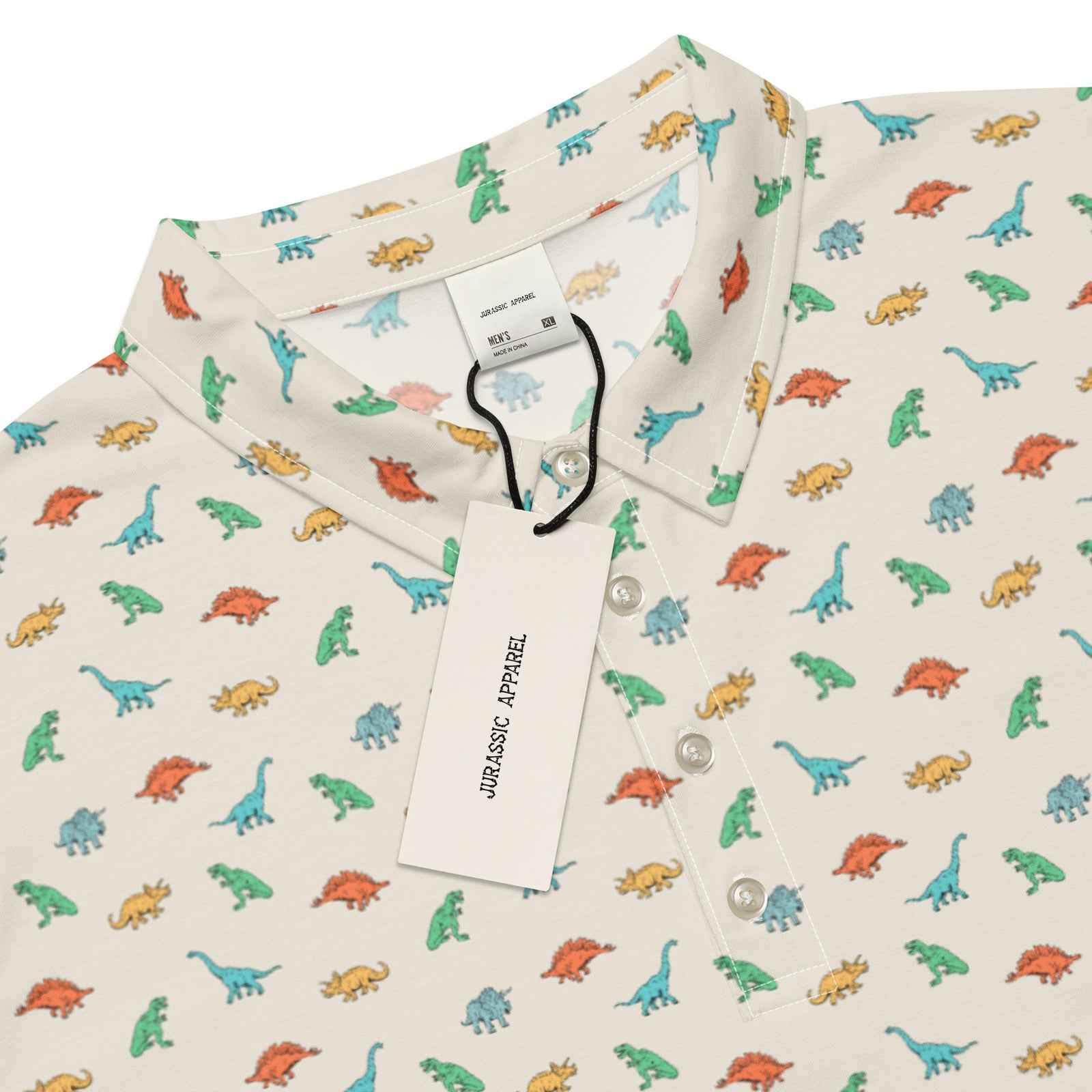
    Love dinosaurs? Check out our collection of dinosaur apparel — fun dinosaur shirts and dinosaur hoodies for the whole family. Because some of us never outgrew our dinosaur phase — and we're proud of it.


    Love dinosaurs? Check out our collection of dinosaur apparel — fun dinosaur shirts for the whole family. Because some of us never outgrew our dinosaur phase — and we're proud of it.

    Leave a comment

    Comments will be approved before showing up.