Free Shipping On Orders over $75

0

Your Cart is Empty

Women's
  • Men's
  • Kids
  • Baby/Toddler
  • Accessories
  • Feathered Dinosaurs: The Complete Guide to Prehistoric Plumage

    March 27, 2026 14 min read

    Feathered Dinosaurs: The Complete Guide to Prehistoric Plumage

    TL;DR: Dozens of dinosaur species possessed feathers or feather-like structures, fundamentally changing our understanding of what dinosaurs looked like. The vast majority of feathered dinosaurs were theropods (two-legged carnivores), with discoveries concentrated in China's fossil beds. Evidence includes direct fossil impressions, preserved feathers in amber, quill knobs on bones, and melanosomes (pigment structures) that reveal actual colors. Birds are living feathered dinosaurs — direct descendants of small theropods that survived the mass extinction 66 million years ago.


    What Are Feathered Dinosaurs?

    A feathered dinosaur is any dinosaur species possessing feathers or feather-like integument (skin covering) — a category that includes all modern birds, which are technically avian dinosaurs.

    For over 150 years after the first dinosaur fossils were identified in the 1820s, scientists depicted dinosaurs as giant, scaly reptiles — essentially oversized lizards. That mental image dominated museums, textbooks, and popular culture through most of the 20th century.

    Everything changed starting in the 1990s. A wave of extraordinary fossil discoveries from China, combined with advances in microscopy and chemical analysis, revealed that many dinosaurs were covered in feathers — not scales. This wasn't speculation or artistic interpretation. These were actual preserved feather impressions in stone, some showing individual barbs and detailed structures identical to modern bird feathers.

    The implications were revolutionary. Feathered dinosaurs proved that:

    • Birds evolved from dinosaurs (specifically from small theropods)
    • Dinosaurs were far more bird-like than reptile-like in appearance and behavior
    • Feathers originally evolved for insulation and display, not flight
    • The dinosaur-bird connection is one of evolution's best-documented transitions

    Today, paleontologists have identified dozens of feathered dinosaur genera through direct fossil evidence, with strong indirect evidence suggesting feathers were widespread across multiple dinosaur groups.


    The Discovery That Changed Everything

    The Archaeopteryx Connection

    The story begins in 1861 with the discovery of Archaeopteryx lithographica — a 150-million-year-old fossil from Germany that possessed both dinosaur traits (teeth, clawed hands, long bony tail) and bird traits (wings with flight feathers).

    British biologist Thomas Henry Huxley recognized immediately that Archaeopteryx represented a transitional form between dinosaurs and birds. He compared its skeleton to Compsognathus, a small theropod dinosaur found in the same limestone deposits, and found them remarkably similar except for the feathers.

    In 1868, Huxley published a groundbreaking paper arguing that birds descended from dinosaurs. He was right — but his theory faced fierce opposition and was largely dismissed for the next century.

    The Chinese Fossil Revolution

    The real breakthrough came in 1996 with the announcement of Sinosauropteryx prima — a small theropod dinosaur from China's Liaoning Province with clear feather impressions covering its body.

    This was the first definitive non-bird dinosaur with preserved feathers. The fossil showed simple, filament-like structures along its back and tail — not flight feathers, but protofeathers that functioned primarily for insulation and display.

    The floodgates opened. Liaoning Province became paleontology's most important fossil site for understanding feathered dinosaurs. The region's unique geology — fine volcanic ash deposits that buried animals quickly and preserved soft tissues — created a fossil treasure trove unlike anything found elsewhere.

    Feathers Preserved in Amber

    In 2016, researchers announced an extraordinary discovery: a feathered dinosaur tail preserved in 99-million-year-old amber from Myanmar.

    Unlike compressed fossil impressions, the amber specimen preserved the three-dimensional structure of feathers in exquisite detail. The tail segment clearly belonged to a non-avian theropod (based on its skeletal structure) and showed multiple feather types, including barbed and branched structures similar to modern bird feathers.

    This wasn't the only amber find. Paleontologists have now discovered multiple feather specimens in Cretaceous amber, some showing color variations and structural complexity matching modern birds. These specimens range from 75-100 million years old — direct proof that complex feathers existed in non-avian dinosaurs tens of millions of years before the end of the Mesozoic.


    Which Dinosaurs Had Feathers?

    Theropods: The Feathered Carnivores

    The vast majority of feathered dinosaur discoveries belong to theropods — the two-legged, mostly carnivorous dinosaur group that includes Tyrannosaurus rex, Velociraptor, and eventually, birds.

    Confirmed feathered theropod groups include:

    Coelurosaurs — A diverse group containing most feathered species, including:

    • Tyrannosauroids: Including Yutyrannus huali, a 30-foot, 3,000-pound tyrannosaur covered in feather-like filaments
    • Dromaeosaurids: The "raptors" like Velociraptor, Microraptor, and Sinornithosaurus — all confirmed to have feathers
    • Oviraptorosaurs: Bird-like dinosaurs with elaborate tail feathers and arm feathers used for nest brooding
    • Therizinosaurs: Bizarre, long-clawed herbivorous theropods with extensive feathering
    • Alvarezsaurids: Tiny, insect-eating dinosaurs with simple feather coverings

    Other theropod groups with feather evidence:

    • Compsognathids: Small predators including Sinosauropteryx, one of the first feathered dinosaur discoveries
    • Ornithomimosaurs: "Ostrich dinosaurs" — long-legged omnivores likely covered in feathers

    How Complete Was Feather Coverage?

    Not all theropods were fully feathered like modern birds. Evidence suggests significant variation:

    Heavily feathered: Small-to-medium theropods like dromaeosaurids had extensive feather coverage over most of the body, including four-winged species like Microraptor with flight feathers on both arms and legs.

    Partially feathered: Larger theropods like tyrannosaurs likely had mixed integument — scales on the legs and tail, feathers on the back, neck, and head. This makes thermoregulatory sense; larger bodies retain heat more efficiently and don't need full insulation.

    Display structures: Many feathered dinosaurs possessed elaborate tail feathers, arm feathers, or head crests made of feathers — structures clearly adapted for visual communication and mate attraction rather than warmth or flight.

    Feathered Ornithischians?

    Feathers weren't exclusive to theropods. At least three ornithischian (bird-hipped) dinosaurs show evidence of feather-like structures:

    • Psittacosaurus — A small ceratopsian with bristle-like filaments on its tail
    • Tianyulong — A heterodontosaurid with filamentous integument along its back and tail
    • Kulindadromeus — A small ornithischian with scale, plate, and feather-like structures covering different body regions

    These discoveries suggest feathers or proto-feathers may have evolved much earlier than previously thought — possibly in the common ancestor of both major dinosaur groups (Ornithoscelida), rather than originating within theropods.

    Some paleontologists now theorize feathers could have originated as far back as early archosaurs (the reptile group including dinosaurs, pterosaurs, and crocodilians), with different lineages preserving or losing them depending on ecological pressures.


    Types of Feather Structures in Dinosaurs

    Dinosaur feathers weren't all identical to modern bird feathers. Paleontologists have identified multiple stages of feather evolution based on structural complexity:

    Stage I: Simple Filaments

    The most primitive feather type — single, hollow, unbranched filaments resembling hair more than modern feathers. These structures, sometimes called "protofeathers" or "dino-fuzz," provided basic insulation.

    Found in: Sinosauropteryx, Dilong, early tyrannosaurs

    Function: Thermoregulation (keeping body heat in)

    Stage II: Tufted Filaments

    Multiple filaments branching from a single base, creating a tuft-like structure. Still no central shaft (rachis) or branching barbs.

    Found in: Some early coelurosaurs

    Function: Enhanced insulation, possible display

    Stage III: Branched Structures

    Development of barbs — the first branching structures extending from a central point. Two variations:

    Stage IIIa: Simple barbs radiating from a central shaft (rachis) — looks like a feather with a main spine

    Stage IIIb: Barbs with secondary branches (barbules) but no central rachis — more tuft-like

    Found in: Various mid-stage coelurosaurs, some oviraptorosaurs

    Function: Better insulation, beginning of display structures

    Stage IV: Pennaceous (Closed-Vane) Feathers

    Full modern-style feathers with a central rachis, branching barbs, and barbules that hook together to form a solid, continuous vane. These are "contour feathers" — the type covering most of a bird's body.

    Found in: Dromaeosaurids, many other advanced theropods, Archaeopteryx

    Function: Insulation, display, limited gliding or flight capability

    Stage V: Asymmetrical Flight Feathers

    The most advanced feather type — asymmetrical feathers optimized for aerodynamic lift. One side of the feather vane is wider than the other, creating the curved profile necessary for powered flight.

    Found in: Microraptor, Archaeopteryx, all birds

    Function: Powered flight and gliding

    Additional Specialized Types

    Filoplumes: Hair-like feathers with few barbs — sensory structures that help birds feel feather position

    Powder down: Specialized feathers that disintegrate into fine powder for waterproofing and maintenance

    Bristles: Stiff, simplified feathers around the mouth of insect-eating birds

    Evidence suggests some non-avian dinosaurs possessed these specialized types, though preservation biases make them difficult to confirm.


    How Do We Know Dinosaurs Had Feathers?

    Direct Fossil Evidence

    The most compelling proof comes from preserved feather impressions in fossilized sediment. When a feathered dinosaur died and was rapidly buried in fine-grained volcanic ash or sediment, the feathers often left detailed impressions before decomposing.

    What we can see in these fossils:

    • Overall body outline showing feather extent
    • Individual feather structure (rachis, barbs, barbules)
    • Feather arrangement patterns
    • Different feather types in different body regions

    The fossil record provides dozens of specimens with clear, unambiguous feather impressions — not speculative reconstructions but direct physical evidence.

    Amber Preservation

    Feathers trapped in tree resin (amber) preserve three-dimensional structure that fossils cannot. These specimens show:

    • Complete feather microstructure
    • Pigmentation patterns
    • Barbule arrangement
    • Evidence of multiple feather types on single specimens

    While we can't identify the specific dinosaur species from isolated feathers, the combination of Cretaceous age, theropod anatomy (when tail vertebrae are preserved), and structural features confirms these came from non-avian feathered dinosaurs.

    Quill Knobs (Ulnar Papillae)

    Modern birds have small bumps on their forearm bones (ulna) where large wing feathers attach. These "quill knobs" leave permanent marks on the bone.

    In 2007, researchers discovered quill knobs on a Velociraptor ulna — definitive proof that velociraptors possessed large, well-developed wing feathers even without preserved feather impressions.

    This anatomical feature provides secondary evidence for feathered dinosaurs when soft tissue preservation is absent.

    Chemical and Microscopic Evidence

    Advanced imaging techniques allow paleontologists to identify melanosomes — microscopic, pigment-bearing organelles that create feather color. Different melanosome shapes produce different colors.

    By analyzing fossilized melanosomes in feather impressions, scientists have reconstructed the actual colors of feathered dinosaurs, including:

    • Sinosauropteryx: Rusty red-and-white striped tail
    • Anchiornis: Black body with white wing stripes and red crest
    • Microraptor: Iridescent blue-black plumage like a modern crow
    • Archaeopteryx: Matte black feathers

    These discoveries prove beyond doubt that these structures were true feathers, not collagen fibers or other tissues.

    Phylogenetic Bracketing

    Even without direct evidence, we can infer feathering in certain dinosaurs based on their evolutionary relationships.

    If closely related species on both sides of a family tree possessed feathers, it's scientifically reasonable to assume intermediate species also had them (unless evidence suggests otherwise).

    Example: Velociraptor had quill knobs. Its close relatives Microraptor and Sinornithosaurus have preserved feather fossils. Therefore, other dromaeosaurids (raptors) almost certainly had feathers even without preserved evidence for every species.


    Why Did Dinosaurs Evolve Feathers?

    Feathers didn't originally evolve for flight — that came much later. The earliest feathers served very different purposes.

    Thermoregulation (Temperature Control)

    The most widely accepted explanation: feathers evolved as insulation to help small dinosaurs retain body heat.

    Warm-blooded animals (or animals with elevated metabolic rates) lose heat rapidly when they're small. A thin covering of filamentous feathers would trap a layer of warm air next to the skin — the same function that down feathers serve in modern birds.

    This explains why smaller theropods tend to have more extensive feathering while larger species show reduced or patchy coverage. Big animals retain heat efficiently and can overheat; small animals lose heat rapidly and need insulation.

    Display and Communication

    Many feathered dinosaurs possessed elaborate, colorful plumage that served no thermoregulatory function. These features evolved for:

    Mate attraction: Bright colors and elaborate feather structures signal health and genetic fitness to potential mates — the same reason peacocks have extravagant tails.

    Species recognition: Distinctive feather patterns help animals identify members of their own species during social interactions and breeding seasons.

    Intimidation displays: Feathers that could be raised or flared (like modern turkey displays) make animals appear larger and more threatening to rivals or predators.

    Evidence includes:

    • Asymmetrical or highly elongated tail feathers with no flight function
    • Species-specific color patterns revealed by melanosome analysis
    • Regional variation in feather types (elaborate head crests, arm feathers, tail fans)

    Brooding and Nest Protection

    Fossils of oviraptorosaurs show adults positioned over nests with arms spread in brooding postures identical to modern ground-nesting birds.

    While no feathers were preserved in these specimens, the posture strongly suggests feathered arms covered and insulated eggs — protecting them from temperature fluctuation and predators.

    This behavior requires extensive arm and body feathering to be effective, providing indirect evidence of feather function.

    Camouflage and Protection

    Color patterns in feathered dinosaurs suggest camouflage adaptations:

    Sinosauropteryx had a rusty-red-and-white striped tail — a countershading pattern common in animals that need to avoid detection. The darker back and lighter belly help break up the animal's outline when seen from above or below.

    Psittacosaurus possessed bristle-like tail feathers that may have enhanced its visual profile or provided tactile sensory functions.

    Precursor to Flight

    Eventually, feathers were co-opted for aerial locomotion in small theropods that jumped or climbed. Once feathers existed for other reasons, natural selection could modify them for aerodynamic functions.

    This is a classic example of exaptation — a trait that evolves for one purpose but gets repurposed for something entirely different. Feathers existed for tens of millions of years before any dinosaur flew.


    The Dinosaur-to-Bird Evolution

    Birds didn't evolve from dinosaurs. Birds ARE dinosaurs — specifically, they're the only surviving lineage of theropod dinosaurs that made it through the mass extinction 66 million years ago.

    The Evolutionary Path

    The transition from ground-dwelling theropod to flying bird involved dozens of anatomical changes occurring over millions of years:

    Skeletal changes:

    • Reduction in body size (most early birds were sparrow-to-crow-sized)
    • Fusion of hand bones into a wing structure
    • Development of a keeled sternum (breastbone) for flight muscle attachment
    • Evolution of a wishbone (furcula) from fused collarbones
    • Hollowing of bones to reduce weight (pneumatization)
    • Reduction and eventual loss of the long bony tail (replaced by a pygostyle)

    Feather evolution:

    • Simple filaments → branched structures → pennaceous feathers → asymmetrical flight feathers
    • Development of specialized feather types (contour, down, flight)
    • Feather arrangement optimized for aerodynamics

    Behavioral changes:

    • Shift from ground-dwelling to tree-dwelling
    • Development of powered flapping flight from gliding or wing-assisted running
    • Evolution of complex vocalizations (preserved in syrinx structures)

    Key Transitional Forms

    Archaeopteryx (150 million years ago): The classic "first bird" — possessed teeth, clawed hands, and a long bony tail (dinosaur traits) plus wings with flight feathers and a wishbone (bird traits). Could likely fly but not as efficiently as modern birds.

    Microraptor (~120 million years ago): A four-winged dromaeosaur with flight feathers on both arms and legs. Probably a glider that used both sets of wings for aerial maneuvering.

    Confuciusornis (~125 million years ago): Early bird with a beak (no teeth), reduced tail, and modern wing structure. Still retained clawed fingers.

    Jeholornis (~120 million years ago): Long-tailed early bird showing mix of primitive (long tail) and advanced (beak, flight capability) features.

    These aren't "missing links" — they're direct fossil evidence of the transition. We have dozens of intermediate forms spanning the morphological and temporal gap between non-avian theropods and modern birds.

    Modern Birds: Living Dinosaurs

    Every bird alive today is a dinosaur. When you watch a robin hunting worms or a hawk soaring overhead, you're watching a direct descendant of Mesozoic theropods.

    The anatomical evidence is overwhelming:

    • Birds have the same skeletal structure as theropods (modified for flight)
    • Birds possess feathers derived from dinosaur feathers
    • Birds have the same reproductive system (hard-shelled eggs, brooding behavior)
    • Birds share behavioral traits with non-avian dinosaurs (territorial displays, complex social structures)

    Modern molecular analysis confirms it. When scientists extracted protein sequences from 68-million-year-old Tyrannosaurus rex bone, the closest genetic matches were chickens and ostriches.


    Did T-Rex Have Feathers?

    This question fascinates both paleontologists and the public — and the answer is complicated.

    The Evidence For Feathered Tyrannosaurs

    We know with certainty that some tyrannosaurs had feathers:

    Yutyrannus huali — A 30-foot, 3,000-pound tyrannosaur from Early Cretaceous China possessed extensive feather-like filaments covering its body. This proves large tyrannosaurs COULD have feathers.

    Dilong paradoxus — A smaller, earlier tyrannosaur (5-6 feet long) with preserved feather impressions.

    Phylogenetic inference: Since multiple tyrannosaur relatives had feathers, it's reasonable to assume T. rex inherited that trait from feathered ancestors.

    The Evidence Against Widespread T-Rex Feathering

    Skin impressions from T. rex specimens show scales, not feathers — specifically on the neck, pelvis, and tail regions.

    Thermoregulatory concerns: Adult T. rex weighed 8-15 tons. Animals that large face overheating problems, not heat loss. Modern elephants and rhinos lack fur for this reason. Full-body feathering would be a liability.

    Climate considerations: T. rex lived in a warmer climate than Yutyrannus. The Chinese tyrannosaur lived in a cooler, more temperate environment where insulation provided advantages.

    The Most Likely Scenario

    T. rex probably had a combination of scales and feathers:

    • Scales on most of the body, legs, and tail (for heat dissipation)
    • Feathers or feather-like filaments on the head, neck, shoulders, and possibly back (for display)

    This mixed integument would allow thermoregulation while providing display structures for intimidation and social signaling.

    Juvenile T. rex almost certainly had more extensive feathering — young tyrannosaurs needed insulation, and their proportionally longer legs and smaller bodies meant higher heat loss.

    As they grew, tyrannosaurs likely shed feathering in favor of scales, similar to how elephants have hair as babies but lose most of it as adults.


    Feathered Dinosaurs in Popular Culture

    The scientific revelation of feathered dinosaurs created a cultural problem: decades of movies, books, and museum displays depicted dinosaurs as scaly reptiles. Changing that mental image has proven difficult.

    The Jurassic Park Effect

    The Jurassic Park franchise (1993-present) cemented the image of scaly, reptilian dinosaurs in the public consciousness — ironically, just as paleontology was discovering widespread feathering.

    Director Steven Spielberg and paleontologist consultant Jack Horner deliberately chose to depict dinosaurs without feathers despite emerging evidence, arguing that feathered raptors would look "less scary" and "too bird-like" for audiences.

    That decision shaped public perception for a generation. Even today, many people picture Velociraptor as a 6-foot-tall scaly predator — when in reality it was turkey-sized and covered in feathers.

    Changing Depictions

    Modern paleontological art increasingly shows feathered dinosaurs, but popular media lags behind:

    Movies and TV: Most mainstream dinosaur media still defaults to scales, with occasional token feathering (usually minimal and poorly integrated)

    Museums: Natural history museums have been faster to update exhibits, with many now displaying feathered dinosaur models based on current science

    Video games: Games like ARK: Survival Evolved and Saurian feature scientifically accurate feathered dinosaurs, though many franchises stick with scaly versions for brand recognition

    Children's books: Newer educational materials increasingly show feathered dinosaurs, gradually shifting the next generation's mental models

    The "Shrink-Wrapped" Problem

    Even feathered dinosaur depictions often show visible muscle definition and bone structure — the "shrink-wrapped" look. Real animals have fat deposits, connective tissue, and keratin structures that soften body outlines.

    Modern paleoart increasingly depicts dinosaurs with realistic soft tissue — acknowledging that we don't know exactly how much fluff, fat, or facial tissue obscured skeletal features.


    Feathered Dinosaurs: Frequently Asked Questions

    Were all dinosaurs feathered?

    No. Evidence suggests feathers were concentrated in theropods (two-legged carnivores) and possibly some early ornithischians, but many dinosaur groups — including sauropods (long-necked giants), ceratopsians (horned dinosaurs), and armored dinosaurs — show no feather evidence and likely had scales, plates, or other integument.

    When did feathers first evolve?

    At least 160-200 million years ago, possibly earlier. The earliest potential evidence comes from Middle Jurassic deposits (~170 million years ago). Feathers definitely existed by the Late Jurassic (150 million years ago) as evidenced by Archaeopteryx.

    Could large dinosaurs like Brachiosaurus have feathers?

    Almost certainly not. Large-bodied animals generate enormous internal heat and need to lose heat, not retain it. Sauropods had very different evolutionary pressures than theropods and show no evidence of feathering. They likely had thick, reptilian skin similar to elephants or rhinos.

    How do feathers fossilize?

    Rapid burial in fine-grained sediment (volcanic ash, lake bed mud) creates conditions where soft tissues leave impressions before decomposing. Exceptional preservation sites (Lagerstätten) like China's Yixian Formation provide the ideal chemistry and sediment for feather fossilization.

    Did dinosaur feathers come in different colors?

    Yes! Analysis of fossilized melanosomes reveals that feathered dinosaurs had colors including black, brown, rusty red, white, iridescent blue-black, and likely others. Pattern analysis shows stripes, spots, and countershading similar to modern animals.

    Are birds really dinosaurs?

    Yes. Birds are not "descended from dinosaurs" — they ARE dinosaurs, specifically members of the theropod lineage that survived the K-Pg extinction. Saying "birds evolved from dinosaurs" is like saying "humans evolved from mammals" — technically true but misleading, since we're still mammals.

    Why don't crocodiles have feathers if they're related to dinosaurs?

    Crocodilians and dinosaurs diverged over 240 million years ago. While both are archosaurs, crocodilians evolved along a separate lineage that never developed feathers (though they do possess beta-keratin proteins similar to those in feathers, suggesting shared ancestry). Their semi-aquatic lifestyle favored scales over feathers.


    The Ongoing Revolution in Paleontology

    Feathered dinosaur discoveries continue transforming our understanding of Mesozoic life. Every new fossil adds detail to the picture of how feathers evolved, what functions they served, and how widespread they were.

    Recent advances include:

    • Protein sequencing from fossilized feathers confirming molecular-level similarities to modern bird feathers
    • Advanced imaging techniques revealing internal feather structure invisible to the naked eye
    • Behavioral modeling using feathered reconstructions to understand thermoregulation, locomotion, and display
    • Expanded geographic discoveries finding feathered dinosaurs outside China in Mongolia, North America, and Europe

    The era of scaly, reptilian dinosaurs is over. The evidence is overwhelming: dinosaurs were feathered, active, and fundamentally bird-like animals that dominated terrestrial ecosystems for 165 million years.

    And they never truly went extinct — they're still here, singing in your backyard and soaring overhead. Every time you see a bird, you're looking at a living dinosaur, carrying forward the legacy of their feathered ancestors.


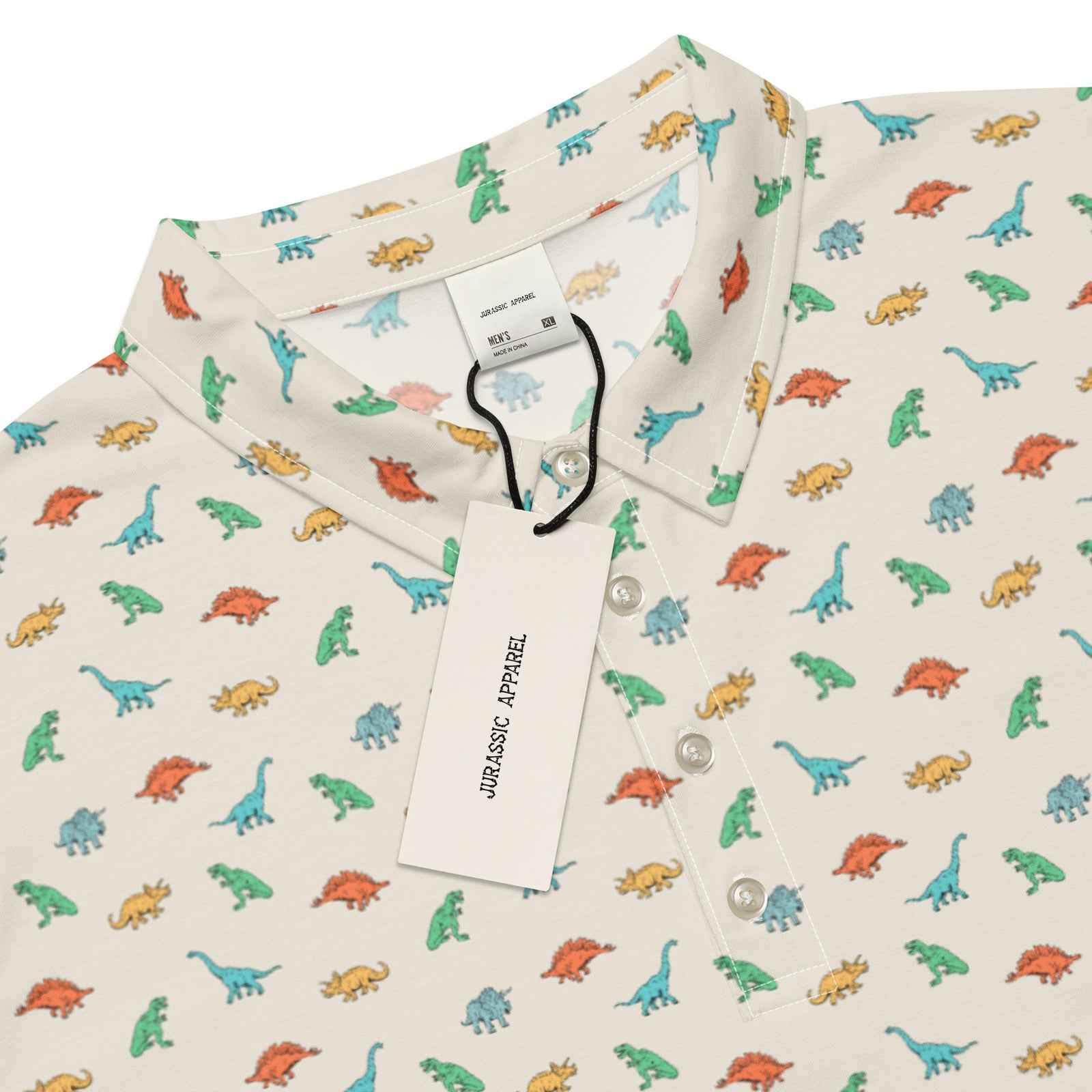
    Love dinosaurs? Check out our collection of dinosaur apparel — fun dinosaur shirts and dinosaur clothing for true paleo-enthusiasts. Because some of us never outgrew our dinosaur phase — and we're proud of it.


    Love dinosaurs? Check out our collection of dinosaur apparel — fun dinosaur shirts for the whole family. Because some of us never outgrew our dinosaur phase — and we're proud of it.

    Leave a comment

    Comments will be approved before showing up.