
Women's


Men's

Kids


Baby/Toddler

Accessories



Dinosaur Names: The Complete Guide to What They Mean and How to Say Them
TL;DR: Dinosaur names come from Greek and Latin words that describe distinctive physical features, behaviors, or discovery locations. The word "dinosaur" itself means "terrible lizard" from Greek deinos (terrible) and sauros (lizard). Famous names like Tyrannosaurus rex ("tyrant lizard king"), Triceratops ("three-horned face"), and Velociraptor ("swift thief") follow scientific naming conventions established in the 18th century. Scientists have discovered and named over 1,000 different dinosaur species, with each name consisting of two parts: the genus (like Tyrannosaurus) and species (like rex). Names often highlight the most striking feature — whether that's enormous size (Giganotosaurus: "giant southern lizard"), unique anatomy (Pachycephalosaurus: "thick-headed lizard"), weaponry (Ankylosaurus: "fused lizard"), or the location where fossils were found (Albertosaurus from Alberta, Canada). Pronunciation follows classical Latin rules, though even scientists sometimes disagree on correct pronunciation. Understanding dinosaur names transforms a confusing jumble of syllables into meaningful descriptions that tell you exactly what made each species special — making it easier to remember them and appreciate the incredible diversity of the Mesozoic Era.
What Does "Dinosaur" Actually Mean?
Before diving into individual dinosaur names, let's start with the word "dinosaur" itself — a name that's only been around since 1842.
"Dinosaur" comes from two Greek words:
- Deinos = terrible, fearfully great, or powerful
- Sauros = lizard or reptile
So "dinosaur" literally means "terrible lizard" or "fearfully great reptile."
Who Coined the Term "Dinosaur"?
Sir Richard Owen, a British paleontologist and anatomist, invented the word "dinosaur" in 1842 after studying several fossil specimens that didn't fit into any known animal categories.
Owen recognized that these extinct creatures — including Megalosaurus, Iguanodon, and Hylaeosaurus — shared distinctive features:
- Upright posture (legs positioned directly beneath the body)
- Large size
- Terrestrial lifestyle (land-dwelling)
- Unique hip and limb structure
He needed a new name for this remarkable group, and "Dinosauria" (dinosaurs) was born.
Important note: Despite the name "terrible lizard," dinosaurs were not actually lizards. They belong to a completely different evolutionary lineage (Archosauria) that's more closely related to modern birds and crocodiles than to lizards and snakes.
 (Sponsored)
How Are Dinosaurs Named?
Dinosaur names follow a formal scientific naming system called binomial nomenclature — the same system used for all living and extinct organisms.
The Two-Part Name System
Every dinosaur has two parts to its scientific name:
1. Genus name (always capitalized)
- Examples: Tyrannosaurus, Triceratops, Stegosaurus
- Groups together closely related species
- Like a last name for a family
2. Species name (always lowercase)
- Examples: rex, horridus, stenops
- Identifies the specific species within the genus
- Like a first name for an individual
Together: Tyrannosaurus rex, Triceratops horridus, Stegosaurus stenops
Why italics? Scientific names are always written in italics (or underlined in handwritten text) to distinguish them from common language.
Where Do the Names Come From?
Dinosaur names are constructed from Greek and Latin roots — the classical languages of science. Paleontologists combine these ancient words to create descriptive names that highlight the dinosaur's most distinctive features.
Names typically describe:
- Physical appearance (size, shape, features)
- Behavior (how it moved or hunted)
- Discovery location (country, region, formation)
- Discoverer (the paleontologist or person who found it)
- Comparisons (what it resembled)
Examples:
- Tyrannosaurus rex = "tyrant lizard king" (describes its dominance)
- Pachycephalosaurus = "thick-headed lizard" (describes its skull)
- Albertosaurus = "Alberta lizard" (where it was found)
- Leaellynasaura = named after Leaellyn Rich, daughter of the discovering paleontologists
The Rules of Naming
The International Code of Zoological Nomenclature (ICZN) sets strict rules:
Priority rule: The first validly published name takes precedence. If two scientists name the same dinosaur differently, the earlier name wins.
Unique names: No two different animals can have the exact same genus/species combination.
Publication requirement: Names must be formally published in scientific literature with a detailed description and designated type specimen.
Validity: Names must follow Latin grammatical rules (even if the root words are Greek).
This is why some famous dinosaur names have been changed or disputed over the years — science demands precision.
Most Famous Dinosaur Names and What They Mean
Let's explore the meanings behind some of the world's most recognizable dinosaur names.
Carnivores (Meat-Eaters)
#### Tyrannosaurus rex
- Pronunciation: tie-RAN-oh-SORE-us RECKS
- Meaning: "Tyrant lizard king"
- Etymology: Greek tyrannos (tyrant) + sauros (lizard) + Latin rex (king)
- Why: Because it was the most powerful predator in its ecosystem — a true king of dinosaurs
#### Velociraptor
- Pronunciation: veh-LOSS-ih-RAP-tor
- Meaning: "Swift thief" or "speedy plunderer"
- Etymology: Latin velox (swift) + raptor (thief/plunderer)
- Why: Small, fast, and likely hunted in packs — grabbing prey quickly
#### Allosaurus
- Pronunciation: AL-oh-SORE-us
- Meaning: "Different lizard"
- Etymology: Greek allos (different) + sauros (lizard)
- Why: Its vertebrae were different from other known dinosaurs when discovered
#### Spinosaurus
- Pronunciation: SPINE-oh-SORE-us
- Meaning: "Spine lizard"
- Etymology: Latin spina (spine/thorn) + Greek sauros (lizard)
- Why: Massive neural spines on its back that may have supported a sail or hump
#### Giganotosaurus
- Pronunciation: jig-ah-NO-toe-SORE-us
- Meaning: "Giant southern lizard"
- Etymology: Greek gigas (giant) + notos (south) + sauros (lizard)
- Why: One of the largest carnivorous dinosaurs, discovered in southern Argentina
#### Carnotaurus
- Pronunciation: KAR-no-TORE-us
- Meaning: "Meat-eating bull"
- Etymology: Latin carnis (meat/flesh) + taurus (bull)
- Why: Large predator with distinctive bull-like horns above its eyes
Herbivores (Plant-Eaters)
#### Triceratops
- Pronunciation: try-SAIR-ah-tops
- Meaning: "Three-horned face"
- Etymology: Greek tri (three) + keras (horn) + ops (face)
- Why: Two large brow horns and one nasal horn — impossible to miss
#### Stegosaurus
- Pronunciation: STEG-oh-SORE-us
- Meaning: "Roof lizard" or "covered lizard"
- Etymology: Greek stegos (roof) + sauros (lizard)
- Why: The plates on its back initially looked like roof tiles to early paleontologists
#### Brachiosaurus
- Pronunciation: BRAK-ee-oh-SORE-us
- Meaning: "Arm lizard"
- Etymology: Greek brachion (arm) + sauros (lizard)
- Why: Its front legs (arms) were longer than its back legs — unusual for sauropods
#### Diplodocus
- Pronunciation: dip-LOD-oh-kus or DIP-loh-DOKE-us
- Meaning: "Double beam"
- Etymology: Greek diplos (double) + dokos (beam)
- Why: Its tail vertebrae had unusual double-beamed chevron bones
#### Ankylosaurus
- Pronunciation: ang-KYE-loh-SORE-us
- Meaning: "Fused lizard" or "stiff lizard"
- Etymology: Greek ankylos (fused/stiff) + sauros (lizard)
- Why: Its armor plates were fused together into a solid shell
#### Parasaurolophus
- Pronunciation: par-ah-sore-OL-oh-fus
- Meaning: "Near crested lizard"
- Etymology: Greek para (near/beside) + sauros (lizard) + lophos (crest)
- Why: Named because it was similar to Saurolophus but with a different crest
#### Pachycephalosaurus
- Pronunciation: pack-ee-SEF-ah-loh-SORE-us
- Meaning: "Thick-headed lizard"
- Etymology: Greek pachys (thick) + kephale (head) + sauros (lizard)
- Why: Its skull dome was up to 10 inches thick — one of the thickest skulls of any dinosaur
#### Apatosaurus
- Pronunciation: ah-PAT-oh-SORE-us
- Meaning: "Deceptive lizard"
- Etymology: Greek apate (deception) + sauros (lizard)
- Why: Its chevron bones resembled those of marine reptiles, initially deceiving scientists
Early Birds and Transitional Forms
#### Archaeopteryx
- Pronunciation: ark-ee-OP-ter-ix
- Meaning: "Ancient wing" or "ancient feather"
- Etymology: Greek archaios (ancient) + pteryx (wing/feather)
- Why: One of the earliest known bird-like dinosaurs, showing the transition from dinosaurs to birds
Common Dinosaur Name Elements: Build Your Own!
Once you understand the Greek and Latin building blocks, dinosaur names become much easier to decode (and remember).
Size and Shape
| Element | Meaning | Example | |---------|---------|---------| | micro- | small | Microraptor (small thief) | | mega- | large | Megalosaurus (large lizard) | | giga- | giant | Giganotosaurus (giant southern lizard) | | macro- | long | Macronaria (long nostrils) | | brevi- | short | Breviparopus (short beside foot) |
Body Parts
| Element | Meaning | Example | |---------|---------|---------| | -saurus | lizard | Tyrannosaurus (tyrant lizard) | | -raptor | thief/plunderer | Velociraptor (swift thief) | | -ceratops | horned face | Triceratops (three-horned face) | | -cephalus | head | Pachycephalosaurus (thick-headed lizard) | | -odon | tooth | Iguanodon (iguana tooth) | | ptero- | wing | Pteranodon (toothless wing) | | brachio- | arm | Brachiosaurus (arm lizard) |
Numbers
| Element | Meaning | Example | |---------|---------|---------| | mono- | one | Monolophosaurus (single-crested lizard) | | di- | two | Diplodocus (double beam) | | tri- | three | Triceratops (three-horned face) | | tetra- | four | Tetanurae (stiff tails) |
Physical Features
| Element | Meaning | Example | |---------|---------|---------| | spino- | spine/thorn | Spinosaurus (spine lizard) | | ankylo- | fused/stiff | Ankylosaurus (fused lizard) | | lopho- | crest | Parasaurolophus (near crested lizard) | | platy- | flat | Plateosaurus (flat lizard) | | stego- | roof/covered | Stegosaurus (roof lizard) |
Behavior and Characteristics
| Element | Meaning | Example | |---------|---------|---------| | veloci- | swift | Velociraptor (swift thief) | | tyranno- | tyrant | Tyrannosaurus (tyrant lizard) | | terr- | terrible | Tarbosaurus (alarming lizard) | | deino- | terrible | Deinonychus (terrible claw) |
How to Pronounce Dinosaur Names
Pronouncing dinosaur names can be intimidating, but there are some basic rules that make it easier.
General Pronunciation Rules
Latin-based pronunciation (most common in paleontology):
- -us ending: Pronounced "us" (Allosaurus = AL-oh-SORE-us)
- -a ending: Pronounced "ah" (Iguanodon = ig-WAN-oh-don)
- -ae ending: Pronounced "ee" or "eye" (Ornithomimidae = or-nith-oh-MIME-ih-dee)
- c before e, i, or y: Soft "s" sound (Ceratosaurus = ser-AT-oh-SORE-us)
- c before a, o, or u: Hard "k" sound (Carnotaurus = KAR-no-TORE-us)
Stress patterns:
- Most dinosaur names stress the third syllable from the end
- Tyrannosaurus: ty-RAN-oh-SORE-us (stress on RAN)
- Parasaurolophus: par-ah-sore-OL-oh-fus (stress on OL)
The Hardest Names to Pronounce
Pachycephalosaurus (pack-ee-SEF-ah-loh-SORE-us)
- Break it down: pachy-cephalo-saurus
- Say it slowly first, then speed up
Carcharodontosaurus (kar-kar-oh-DON-toe-SORE-us)
- Break it down: carcharo-donto-saurus
- The double "r" can trip people up
Deinocheirus (dine-oh-KYE-rus)
- Break it down: deino-cheirus
- The "ch" is a hard "k" sound
Quetzalcoatlus (KWET-zal-koh-AT-lus)
- Named after Aztec god Quetzalcoatl
- Not technically a dinosaur (it was a pterosaur)
Common Mispronunciations
❌ Wrong: "dip-loh-DOCK-us" ✅ Right: dip-LOD-oh-kus or DIP-loh-DOKE-us (Diplodocus)
❌ Wrong: "PEE-ter-oh-don" ✅ Right: teh-RAN-oh-don (Pteranodon — the "P" is silent!)
❌ Wrong: "bronto-SORE-us" ✅ Right: BRON-toh-SORE-us (Brontosaurus)
Dinosaur Names by Category
Armored Dinosaurs (Thyreophorans)
Dinosaurs with protective armor, plates, or spikes.
- Ankylosaurus ("fused lizard") — club-tailed tank
- Stegosaurus ("roof lizard") — plate-backed herbivore
- Kentrosaurus ("spiked lizard") — African stegosaur
- Euoplocephalus ("well-armored head") — heavily armored ankylosaur
Horned Dinosaurs (Ceratopsians)
Dinosaurs with horns and frills.
- Triceratops ("three-horned face") — iconic three-horned dinosaur
- Styracosaurus ("spiked lizard") — frill covered in spikes
- Protoceratops ("first horned face") — early horned dinosaur
- Pentaceratops ("five-horned face") — five facial horns
Duck-Billed Dinosaurs (Hadrosaurs)
Herbivores with flat, duck-like beaks.
- Parasaurolophus ("near crested lizard") — long backward-curving crest
- Edmontosaurus ("Edmonton lizard") — from Edmonton, Canada
- Maiasaura ("good mother lizard") — evidence of nesting behavior
- Corythosaurus ("helmet lizard") — helmet-shaped crest
Long-Necked Dinosaurs (Sauropods)
The largest land animals ever, with long necks and tails.
- Brachiosaurus ("arm lizard") — giraffe-like posture
- Diplodocus ("double beam") — extremely long tail
- Argentinosaurus ("Argentina lizard") — possibly the largest dinosaur
- Apatosaurus ("deceptive lizard") — formerly known as Brontosaurus
Meat-Eaters (Theropods)
Bipedal predators ranging from tiny to enormous.
- Tyrannosaurus rex ("tyrant lizard king") — apex predator
- Velociraptor ("swift thief") — intelligent pack hunter
- Spinosaurus ("spine lizard") — largest carnivorous dinosaur
- Allosaurus ("different lizard") — Jurassic apex predator
- Compsognathus ("elegant jaw") — chicken-sized predator
Funny, Unusual, and Controversial Dinosaur Names
Not all dinosaur names are serious and intimidating. Some are downright amusing.
Names That Sound Silly (But Aren't)
Dracorex hogwartsia ("dragon king of Hogwarts")
- Named by Harry Potter fans who discovered it
- May actually be a juvenile Pachycephalosaurus
Irritator challengeri
- Named because the fossil was so poorly prepared it "irritated" scientists
- Also honors Professor Challenger from The Lost World
Bambiraptor
- Named after the Disney character due to its small size
- Actually a very important juvenile dromaeosaur fossil
Gasosaurus
- Named after the gasoline company whose workers discovered it
- Not related to flatulence
Controversial Name Changes
Brontosaurus vs. Apatosaurus
- Brontosaurus ("thunder lizard") was declared invalid in 1903
- Merged with Apatosaurus for over a century
- Resurrected as valid in 2015 (still debated)
Torosaurus vs. Triceratops
- Some scientists argue Torosaurus is just an elderly Triceratops
- Others maintain they're separate species
- Debate continues
How Many Dinosaur Names Are There?
Over 1,000 different dinosaur genera have been named, though not all are considered valid today.
Why the discrepancy?
- Duplicate discoveries: Same dinosaur given different names
- Fragmentary fossils: Insufficient evidence to confirm it's a new species
- Reclassification: Better understanding leads to merging or splitting species
New dinosaurs are discovered regularly — an average of 40-50 new species are named every year. As paleontology technology improves (CT scanning, isotope analysis, 3D modeling), scientists continue finding and identifying new species from existing fossils.
Why Do Dinosaur Names Matter?
Understanding dinosaur names isn't just about memorization — it's about unlocking the story each name tells.
Names preserve history: Every name commemorates a discovery, a place, or a person involved in paleontology.
Names aid communication: Scientists worldwide can discuss the same species without confusion.
Names spark curiosity: A well-chosen name (like "Velociraptor" or "Giganotosaurus") captures imagination and makes people want to learn more.
Names teach us: Breaking down Pachycephalosaurus teaches Greek roots that appear in medicine, biology, and everyday language.
Frequently Asked Questions
Who decides what dinosaurs are named?
The paleontologist who discovers and formally describes the fossil has the honor of naming it, following ICZN rules. Names must be published in peer-reviewed scientific journals.
Can dinosaurs be renamed?
Generally no — the principle of priority protects the first validly published name. However, names can be changed if the original was invalid, improperly formed, or if the dinosaur is reclassified.
What's the longest dinosaur name?
Micropachycephalosaurus (my-kro-pack-ee-SEF-ah-loh-SORE-us) — meaning "tiny thick-headed lizard" — holds the record at 23 letters. Ironically, it wasn't particularly tiny for its group.
What's the shortest dinosaur name?
Minmi — a small ankylosaur from Australia named after Minmi Crossing where it was discovered. Just 5 letters!
Are all dinosaur names Greek or Latin?
Most are, but some incorporate other languages:
- Quetzalcoatlus — Nahuatl (Aztec)
- Yutyrannus — Chinese + Latin ("feathered tyrant")
- Khaan — Mongolian ("lord")
Why are some dinosaur names so hard to pronounce?
Because they're constructed from ancient Greek and Latin, languages with different pronunciation rules than modern English. Compound words create especially long names when describing multiple features.
Do all dinosaurs end in "-saurus"?
No! While -saurus (lizard) is the most common ending, many don't use it:
- Velociraptor (ends in -raptor)
- Triceratops (ends in -ops)
- Iguanodon (ends in -odon)
- Archaeopteryx (ends in -pteryx)
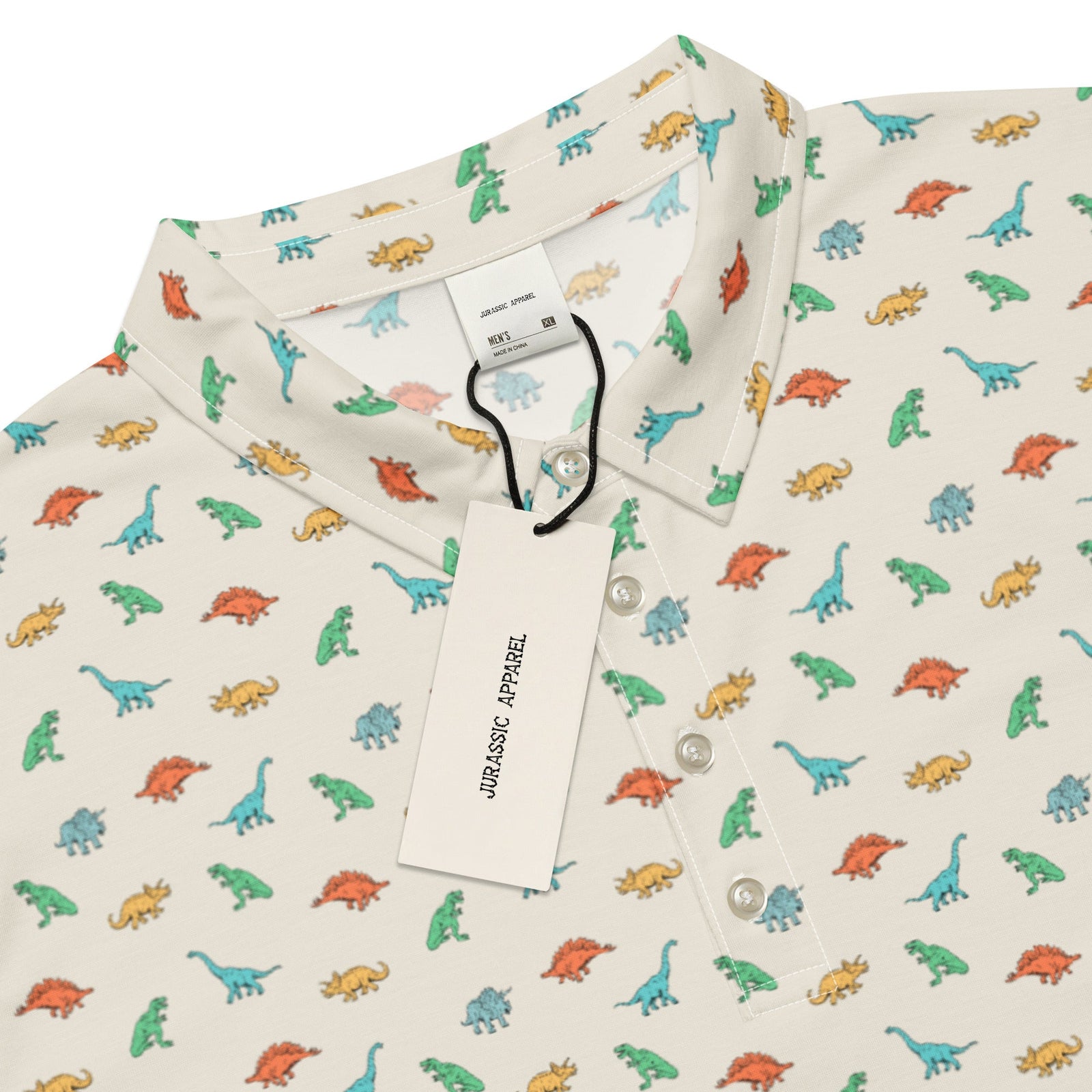
Love dinosaurs? Check out our collection of dinosaur apparel — fun dinosaur shirts for the whole family. Because some of us never outgrew our dinosaur phase — and we're proud of it.
Love dinosaurs? Check out our collection of dinosaur apparel — fun dinosaur shirts for the whole family. Because some of us never outgrew our dinosaur phase — and we're proud of it.
Leave a comment
Comments will be approved before showing up.


